
AI Agents as the Future of Scientific Discovery: Why AlphaFold Is Just the Beginning
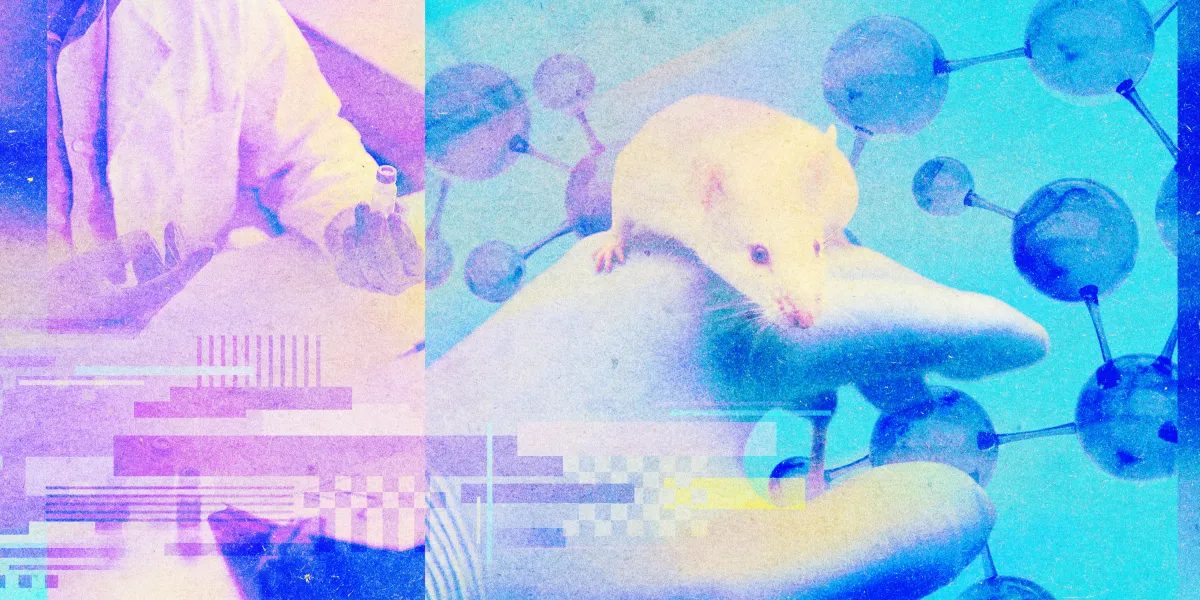
Photo: MIT Technology Review
Quick answer
AI agents could unlock faster scientific breakthroughs by replicating the iterative, hypothesis-driven research process rather than relying on vast pre-built datasets like AlphaFold.
In 2024, the Google DeepMind team celebrated a landmark achievement: their AlphaFold neural network won the Nobel Prize in Chemistry for revolutionizing protein structure prediction. However, experts at MIT Technology Review argue that AlphaFold is not the ideal model for accelerating scientific discovery. Instead, autonomous AI agents—capable of mimicking the human research process—may hold the key.
AlphaFold relied on a dataset of 170,000 experimentally validated protein structures, compiled over more than half a century at a cost of roughly $21 billion. In many scientific fields, assembling such datasets is impossible. AI agents, by contrast, don’t require massive data volumes. They model the iterative research process, testing hypotheses and adapting to new conditions, making them far more versatile tools.
Unlike narrow AI models, AI agents can operate across diverse domains, replicating the logic of human researchers. This opens doors to faster discoveries in medicine, materials science, and other fields where data is scarce or prohibitively expensive to obtain. Experts believe this approach represents the next frontier in scientific AI.
Common questions
- How do AI agents differ from models like AlphaFold?
- AlphaFold solves a specific task using massive datasets, while AI agents emulate the flexible, iterative research process, working with smaller data volumes and adapting to new conditions.
- Why isn’t AlphaFold suitable for all scientific fields?
- AlphaFold required 170,000 protein structures—data that took 53 years and billions of dollars to compile. Many scientific domains lack such resources.
- What advantages do AI agents offer in science?
- They replicate the research cycle, test hypotheses, and adapt dynamically, accelerating discoveries in data-scarce fields where traditional AI models fall short.
Dzen feed: /feed/dzen.xml · RSS: /feed.xml