
AMD Claims 256-Core Zen 6 EPYC Outperforms Nvidia Vera by 3.3x
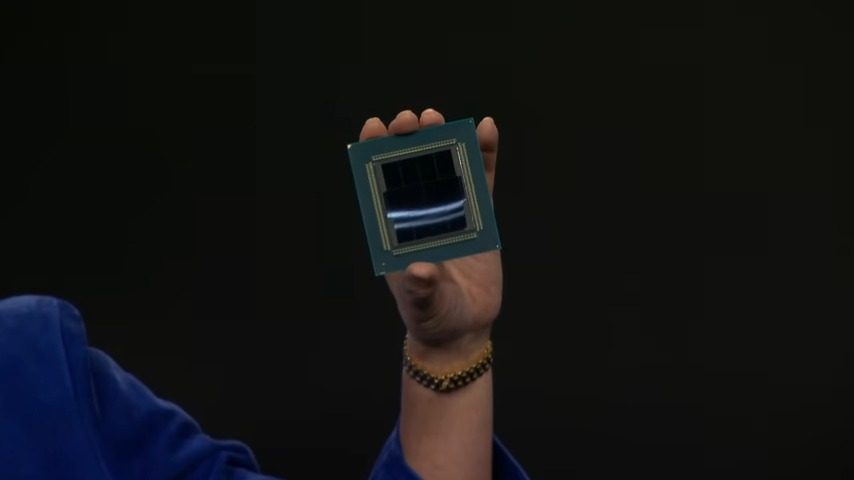
Photo: Tom's Hardware
Quick answer
AMD presented estimated benchmarks for its EPYC 'Venice' processors on Zen 6, claiming a 3.3x performance advantage over Nvidia Vera at the rack level with a 100 kW power limit.
AMD has for the first time disclosed preliminary performance data for its upcoming EPYC 'Venice' server processors, built on the Zen 6 architecture. The flagship 256-core model reportedly outperforms Nvidia Vera by 3.3x when compared at the rack level with a fixed 100 kW power consumption, according to the company.
It is important to note that these results are based on simulations rather than direct measurements. AMD evaluated performance at the rack level, not individual nodes, using TDP data for processors and additional components. Scaling factors of 1.63x for Nvidia Vera (based on Phoronix tests) and 1.7x for EPYC Venice relative to EPYC 9965 were applied for calculations.
The benchmarks covered a range of data center tasks, including SPEC CPU 2017 (integer operations), server-side Java processing (SPECjbb 2015), web server loads (NGINX), in-memory computing (Redis), and database operations (MySQL). AMD emphasizes that these results are preliminary and do not replace direct benchmarks.
The data release coincides with preparations for the Advancing AI event, where the company plans to reveal more details about Zen 6 and its enterprise market strategy. Earlier, Nvidia presented its own Vera benchmark results, which may have prompted AMD's response.
Common questions
- Which processors did AMD compare in its benchmarks?
- AMD compared its future EPYC 'Venice' processors based on the Zen 6 architecture with Nvidia Vera. Performance evaluation was conducted at the rack level, not individual chips.
- What are the AMD benchmark results based on?
- The results are based on simulations and estimates, not direct measurements. AMD used data from Nvidia Grace and scaling factors to predict Vera and its own chip performance.
- What workloads were tested in the benchmarks?
- The testing covered common data center tasks: Java processing, web server loads (NGINX), database operations (MySQL), and in-memory computing (Redis, Memcached).
Dzen feed: /feed/dzen.xml · RSS: /feed.xml