
ASML and the Future of Chip Manufacturing: Monopoly at Risk
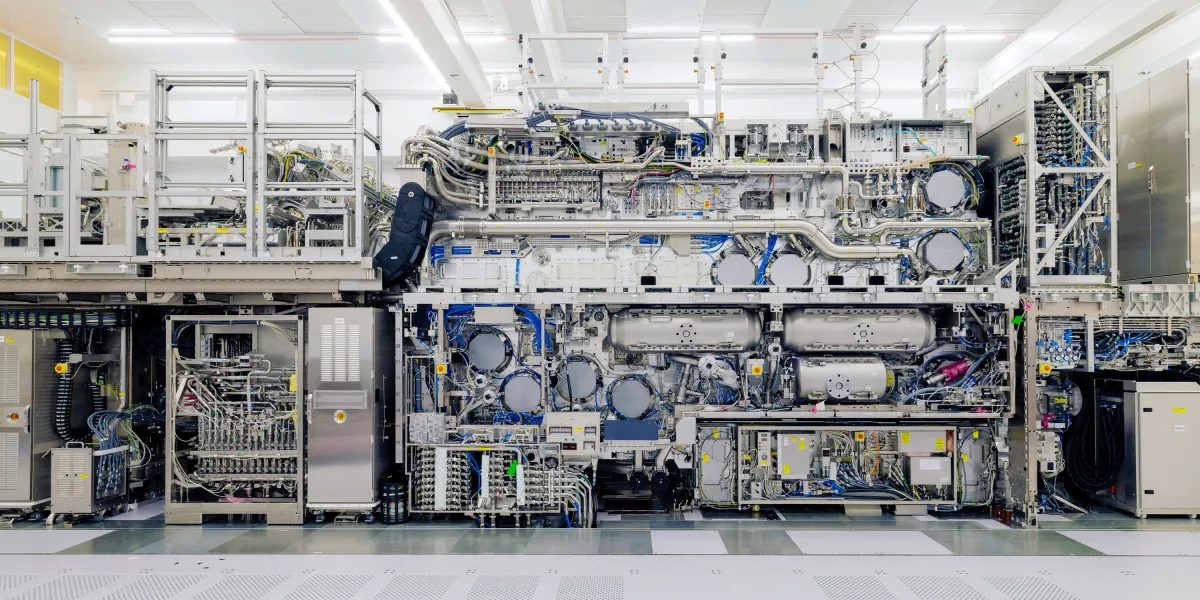
Photo: MIT Technology Review
Quick answer
ASML dominates the chip lithography equipment market (90%) using EUV technology. Competitors and governments are attempting to weaken its monopoly due to the strategic importance of semiconductor production.
Next-generation chip production is impossible without equipment from ASML, which controls about 90% of the global lithography systems market. Its machines use extreme ultraviolet (EUV) radiation to create microscopic elements on silicon wafers. The technology relies on generating radiation by laser impact on molten tin droplets, repeated tens of thousands of times per second.
A single such machine costs up to 29,5 млрд ₽, making it one of the most expensive production units in the world. However, ASML's dominance raises concerns among governments and competitors, who view dependence on a single supplier as a strategic risk. In particular, countries are striving to develop their own technologies to reduce ASML's influence on the global semiconductor market.
Meanwhile, Anthropic has found itself in the spotlight following a conflict with U.S. authorities. In April, it introduced the Mythos model, which could pose a cybersecurity threat, followed by its safer version, Fable. However, within days, the government imposed export restrictions on both models, after which Anthropic blocked access to them. This incident highlights the growing tension between AI developers and regulators, especially regarding control over potentially dangerous technologies.
Common questions
- Why does ASML play a key role in chip production?
- ASML manufactures unique lithography machines with EUV technology, enabling the creation of chips with minimal element sizes. This is critical for AI and high-performance processors.
- What threats exist to ASML's monopoly?
- Competitors are developing alternative technologies, while governments aim to reduce dependence on a single supplier due to geopolitical and economic risks.
- What caused the conflict between Anthropic and the U.S. government?
- Anthropic developed the Mythos model, which authorities deemed potentially dangerous for cybersecurity. After export restrictions were imposed, the company revoked access to both Mythos and its safer version, Fable.
Dzen feed: /feed/dzen.xml · RSS: /feed.xml