
Physical AI: The Future Lies in Smart Interfaces, Not Robots
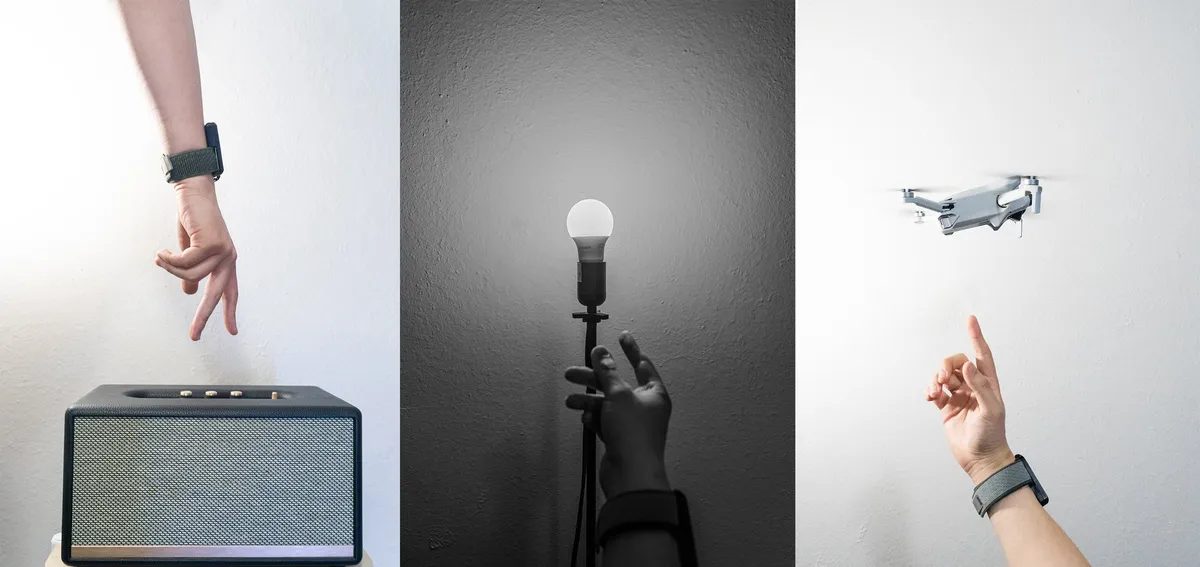
Photo: IEEE Spectrum
Quick answer
Физический ИИ меняет подход к взаимодействию человека и машины. Wetour Robotics представила Spatial Intent Fusion — технологию, распознающую намерения пользователя по жестам и движениям без экранов и кнопок.
Recent years in physical AI have been marked by breakthroughs in robotics, with companies like Boston Dynamics and Unitree achieving impressive advancements in mobility and manipulation, while models from Google DeepMind have redefined computer vision and control systems. However, one critical issue has persisted: human-machine interfaces have remained largely unchanged for decades, relying on screens, buttons, and voice commands.
Wetour Robotics introduces a fundamentally new approach called Spatial Intent Fusion. The technology integrates three data streams—user spatial positioning, visual context, and gestures—to instantly recognize intent and convert it into commands for connected devices. This allows users to control equipment without diverting attention to traditional interfaces, a capability critical in scenarios where hands are occupied or voice control is impractical.
At the core of the system is the Orchestra platform, powered by NVIDIA Jetson Orin Nano Super. It processes data from cameras and wearable sensors, including surface electromyographic (sEMG) sensors that detect muscle activity 50–80 milliseconds before a gesture is executed. This enables the system to predict user actions rather than react to them after the fact. The full data processing cycle takes less than 100 milliseconds, ensuring natural interaction.
Developers acknowledge that the technology is not yet perfect: sEMG signal quality degrades during movement, and edge computing miniaturization requires trade-offs between performance and energy efficiency. Nonetheless, Wetour Robotics' approach unlocks new possibilities for integrating humans into digital systems, positioning them as full participants alongside devices. This not only enhances user experience but also generates valuable data for training future physical AI models.
Common questions
- Что такое Spatial Intent Fusion от Wetour Robotics?
- Технология, объединяющая данные о положении тела, визуальном контексте и жестах для мгновенного распознавания намерений пользователя и управления устройствами без традиционных интерфейсов.
- Как работает система Orchestra на базе NVIDIA Jetson Orin Nano Super?
- Обрабатывает данные с камер и носимых датчиков (включая sEMG-сенсоры), предсказывая действия пользователя за 50–80 мс до выполнения жеста. Полный цикл обработки занимает менее 100 мс.
- Какие преимущества дает Spatial Intent Fusion в производственных условиях?
- Позволяет управлять техникой без отрыва от работы, когда руки заняты или голосовое управление невозможно. Ускоряет взаимодействие и снижает необходимость в традиционных интерфейсах.
- Какие ограничения есть у технологии Wetour Robotics?
- Качество сигнала sEMG снижается при движении, а миниатюризация edge-вычислений требует баланса между производительностью и энергоэффективностью.
Dzen feed: /feed/dzen.xml · RSS: /feed.xml