
Earth's Fungal Networks Extend Beyond the Solar System
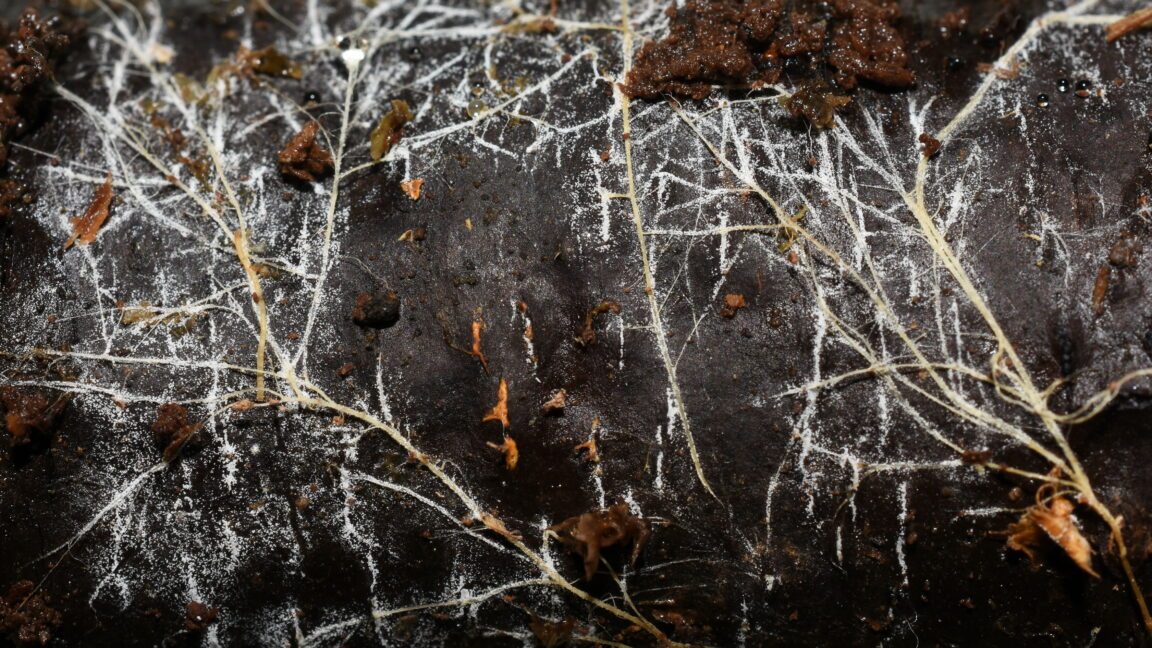
Photo: Ars Technica
Quick answer
Scientists have discovered that the total length of Earth's fungal networks is 450 quadrillion kilometers, ten times larger than the Solar System's diameter.
An international team of scientists conducted a large-scale study to assess the extent and mass of arbuscular mycorrhizal fungal networks spread across the planet. These fungi form symbiotic bonds with plant roots, providing them with water and minerals in exchange for organic substances. The study's results showed that the total length of fungal hyphae reaches 450 quadrillion kilometers—ten times the diameter of the Solar System.
Fungal networks play a critical role in global ecosystems. They participate in the carbon cycle, help accumulate nutrients in the soil, and support biodiversity. Scientists note that these networks can store up to a third of the world's soil carbon reserves, making them a key factor in combating climate change. Additionally, their study opens prospects for developing new biotechnological solutions.
In the future, this data could be used to create innovative materials, improve agricultural methods, and develop bioremediation technologies—cleaning soils and waters from pollution using living organisms. The study also underscores the need to preserve soil ecosystems, which often go unnoticed but play a vital role in sustaining life on Earth.
Common questions
- What are arbuscular mycorrhizal fungi?
- These are fungi that form symbiotic relationships with plant roots, helping plants absorb water and nutrients while receiving carbohydrates in return.
- Why is the length of fungal networks important?
- The scale of these networks highlights their global significance in ecosystems. They participate in the carbon cycle, influence soil fertility, and can be harnessed in biotechnology to improve agriculture.
- How can this data be applied in technology?
- Studying fungal networks could lead to the development of new materials, bioremediation technologies, and sustainable farming methods based on natural mechanisms.
Dzen feed: /feed/dzen.xml · RSS: /feed.xml