
How AI and Biochemistry Are Crafting Future Medicines for Animals and Plants
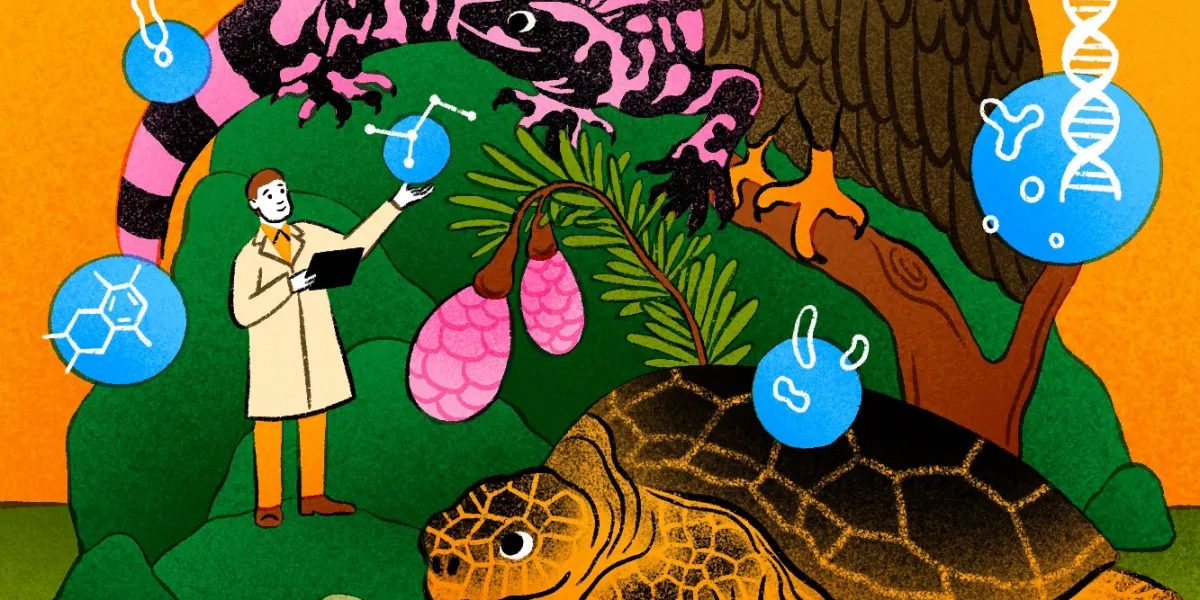
Photo: MIT Technology Review
Quick answer
The emerging discipline of 'conservation chemistry' combines AI and biotechnology to design drugs and treatments that safeguard endangered animals and plants from disease and extinction.
Professor Tim Cernak of the University of Michigan is leading a groundbreaking initiative in biochemistry he calls 'conservation chemistry.' Unlike traditional approaches focused solely on human medicine, Cernak and his team are developing drugs for animals and plants facing extinction threats.
The cornerstone of their work is Google DeepMind’s AlphaFold model, which enables scientists to visualize 3D protein structures without lab cultivation. This breakthrough allows rapid testing of thousands of potential drugs—robots in Cernak’s lab can conduct up to 1,500 reactions daily—dramatically accelerating development timelines and reducing costs.
Among Cernak’s projects are treatments for loggerhead sea turtles with contagious tumors, medications for eagles suffering from avian flu, and insecticides to protect trees from pests. His team also explores species that have already benefited humanity, such as Gila monster hormones, which inspired weight-loss drugs like Ozempic.
Despite historical risks of chemical interventions in nature (e.g., DDT), Cernak argues that rejecting modern technology in conservation is a missed opportunity. 'We live in an era of mass extinction, yet we rely on outdated methods to address it. Why not apply the same high-tech solutions used in human medicine?' he asks.
Common questions
- What is 'conservation chemistry'?
- A cutting-edge scientific field that integrates biochemistry and AI to develop medications and treatments protecting animals and plants from diseases and extinction. It accelerates research through automation and machine learning.
- How does AI assist in developing animal medications?
- Tools like AlphaFold enable rapid visualization of protein structures and testing of thousands of potential drugs, drastically reducing research time and costs while improving efficiency.
- Which animal species are already benefiting from these technologies?
- Current projects include treatments for loggerhead sea turtles, eagles, venomous lizards like the Gila monster, and even trees threatened by pests. These innovations address previously untreatable diseases and threats.
Dzen feed: /feed/dzen.xml · RSS: /feed.xml