
How Worms and Microbes Are Solving Manure Pollution in Agriculture
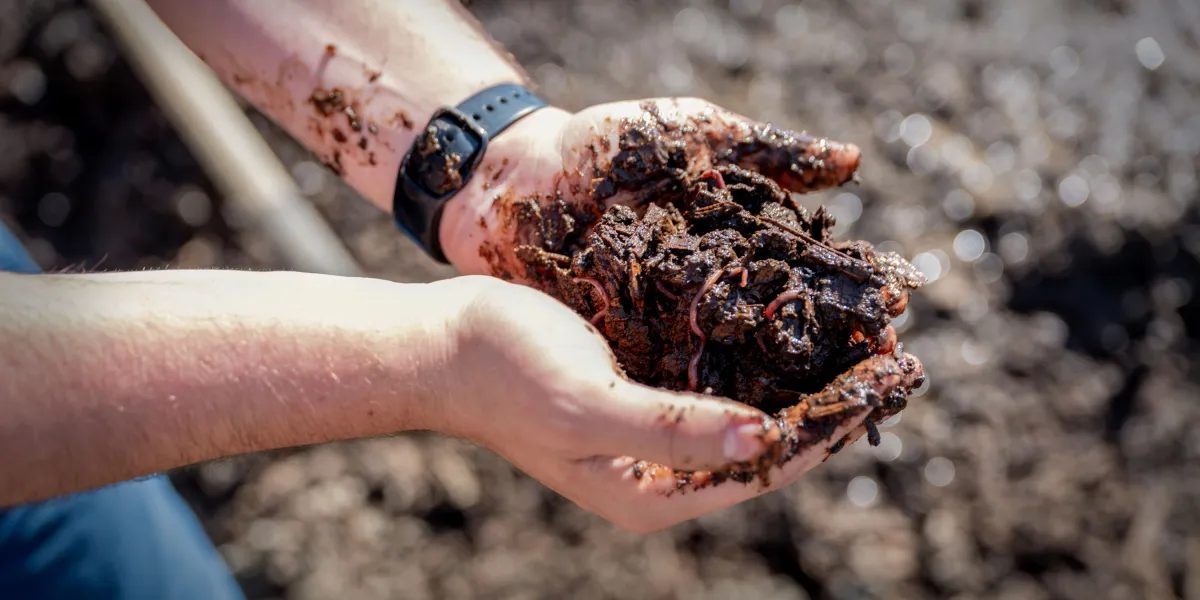
Photo: MIT Technology Review
Quick answer
Biofiltration technology using worms and microbes effectively cleans manure wastewater, reducing nitrogen and ammonia pollution.
California dairy farms are adopting an innovative manure wastewater treatment system using worms and microbes. Developed by BioFiltro, the technology significantly reduces nitrogen and other harmful substances in livestock waste.
The process begins with mechanical filtration to separate solids, which are repurposed as compost or fertilizer. The remaining liquid flows into biofilters—layers of wood chips populated by worms and microbes. Within four hours, they break down organic matter, drastically lowering pollutant concentrations.
Experts from the University of California, Davis, confirm the method’s effectiveness. According to Professor Frank Mitloehner, the system nearly eliminates nitrogen, preventing ammonia and nitrate emissions into the environment. This makes the technology a promising solution for sustainable agriculture.
Farmers report that biofiltration not only addresses pollution but also cuts waste disposal costs. In the future, such systems could become the standard for large-scale livestock operations.
Common questions
- How does the worm-based biofiltration system work?
- Manure wastewater passes through a layer of wood chips inhabited by worms and microorganisms. They break down organic waste, reducing nitrogen and other pollutants within hours.
- What are the benefits of using worms in manure treatment?
- Worms and microbes accelerate organic decomposition, cut ammonia and nitrate emissions, and reduce solid waste volume. This lowers environmental pressure on soil and water bodies.
- Where is this technology already in use?
- BioFiltro’s system has been tested on California dairy farms since 2024. Studies confirm its effectiveness in cleaning wastewater from contaminants.
Dzen feed: /feed/dzen.xml · RSS: /feed.xml