
How AI is Reshaping Power Grids: New Challenges for Electrical Networks
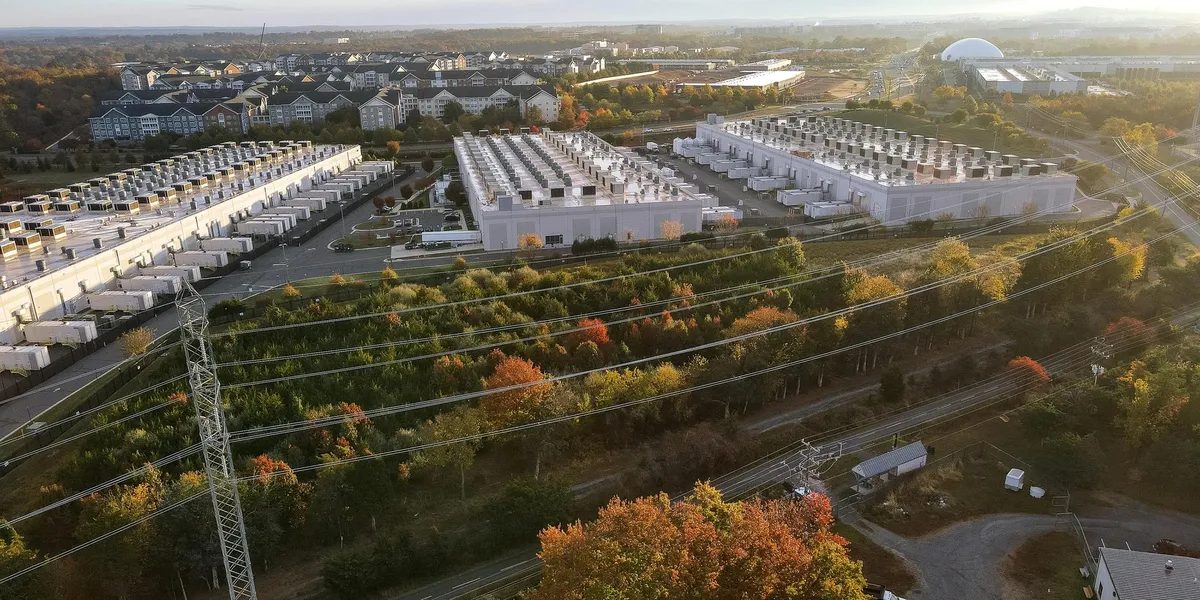
Photo: IEEE Spectrum
Quick answer
AI infrastructure is straining power grids with unpredictable energy spikes from compute clusters, destabilizing networks and necessitating updates to forecasting models and regulatory standards.
The expansion of artificial intelligence infrastructure is often viewed through the lens of energy consumption: by 2030, data centers could account for 3–4% of global electricity demand. Yet the core issue lies not in sheer volume, but in the nature of these loads. High-density AI compute clusters, used for model training and inference, generate abrupt and unpredictable energy spikes, complicating grid operations.
Model training is typically synchronized and intensive, leading to millisecond-scale load fluctuations. Inference, by contrast, is distributed and user-driven, yet equally destabilizing. Unlike traditional industrial loads, these computing processes defy precise forecasting, placing additional strain on grid backup systems, frequency control, and local networks.
Geographic concentration of data centers exacerbates the problem. Regions with favorable hosting conditions, such as Northern Virginia, face localized overloads despite overall grid capacity. Cooling systems further amplify instability, reacting nonlinearly to computing load changes and introducing additional energy consumption fluctuations.
Experts emphasize that current regulatory and operational frameworks fail to account for such dynamic loads. While operators are deploying demand response mechanisms, energy storage, and load-balancing systems, modernization efforts lag behind the pace of AI compute growth. Long-term solutions will require rethinking energy system planning and developing new standards for integrating highly variable loads.
Common questions
- Why is AI data center energy consumption so hard to predict?
- It depends not only on volume but also on the synchronization of computing processes. Model training and inference create unpredictable load spikes that traditional forecasting models cannot accommodate.
- Which regions face the greatest pressure from AI data centers?
- Clustering of data centers in regions with low electricity tariffs, such as Northern Virginia (USA), creates localized overloads despite overall grid capacity.
- How are grid operators adapting to these new challenges?
- Operators are implementing demand response systems, energy storage, and improved load-balancing mechanisms. However, infrastructure modernization lags behind the growth of computing power.
Dzen feed: /feed/dzen.xml · RSS: /feed.xml