
How Data from Obsolete Floppy Disks Is Being Saved: Cambridge University’s Experience
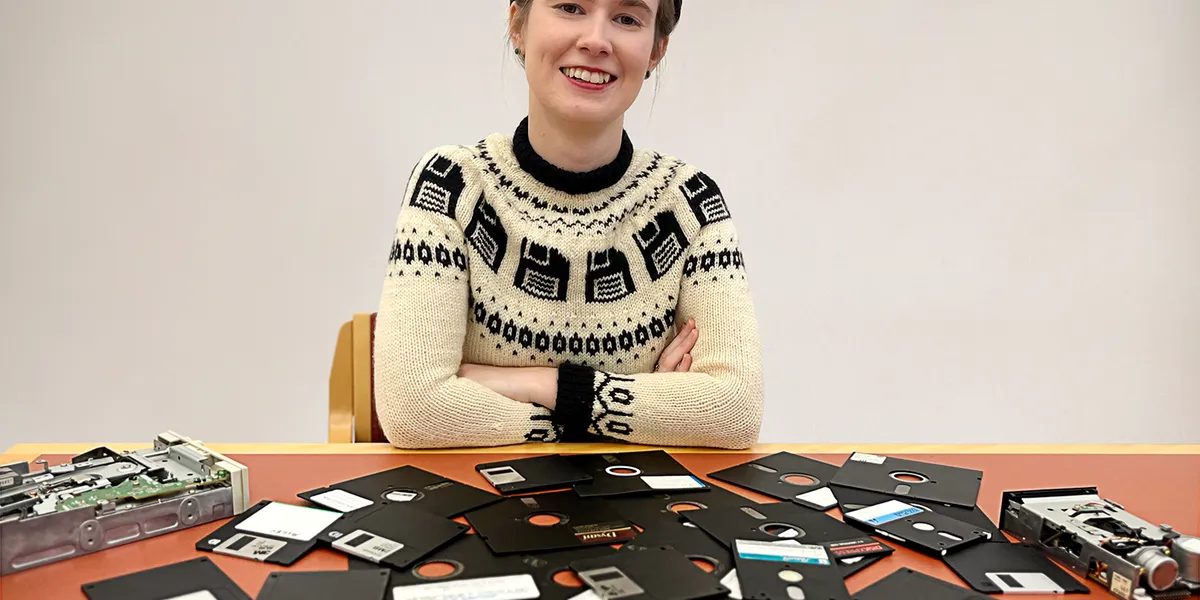
Photo: IEEE Spectrum
Quick answer
Кембриджский университет спасает данные с устаревших дискет проекта «Future Nostalgia», восстанавливая уникальные файлы и сохраняя цифровое наследие. Опыт и нестандартные форматы — главные вызовы инициативы.
Floppy disks, widely used in the 1980s and 1990s, have today become fragile artifacts. The magnetic layer containing data degrades over time, while mold and mechanical damage accelerate deterioration. Disks stored in unsuitable conditions—such as attics or garages—are particularly vulnerable. However, physical degradation is not the only challenge.
Experts note that as engineers who developed floppy-based systems retire, unique expertise in handling them is also being lost. Leontie Talboom, a technical analyst at Cambridge University, emphasized that many nuances—such as how to recover a jammed disk—were passed down only through hands-on experience. To address this, the project team turned to the retro-computing community, which preserves old computers and shares knowledge about rare formats.
One of the biggest challenges was working with non-standard file systems. While home PCs like Amstrad or ZX Spectrum are well-documented, business systems and research platforms often remain overlooked. Talboom noted that 3-inch Amstrad disks, popular in Europe, are nearly nonexistent in the U.S., as their production was phased out before the transition to the 3.5-inch format.
After digitization, the team plans to regularly verify data integrity and convert files to modern formats as needed. The 'Future Nostalgia' project concluded in January, but its results will help preserve digital heritage for future generations.
Common questions
- Почему дискеты сегодня считаются уязвимыми для хранения данных?
- Магнитный слой дискет разрушается со временем, а плесень и механические повреждения ускоряют деградацию. Особенно уязвимы носители, хранившиеся в неподходящих условиях.
- Какие основные трудности возникают при восстановлении данных с дискет?
- Потеря уникального опыта работы с дискетными системами, нестандартные файловые системы и отсутствие документации для редких форматов, таких как 3-дюймовые дискеты Amstrad.
- Как Кембриджский университет решает проблему восстановления данных с дискет?
- Проект «Future Nostalgia» использует ретро-сообщество для передачи знаний, оцифровывает данные и планирует регулярную проверку их целостности с конвертацией в современные форматы.
- Какие дискеты были особенно сложны для восстановления в проекте?
- 3-дюймовые дискеты Amstrad, популярные в Европе, но практически не встречающиеся в США из-за ограниченного производства до перехода на 3,5-дюймовый формат.
Dzen feed: /feed/dzen.xml · RSS: /feed.xml