
Microsoft Patches Record 570 Windows Vulnerabilities, Including Two Exploited Zero-Days
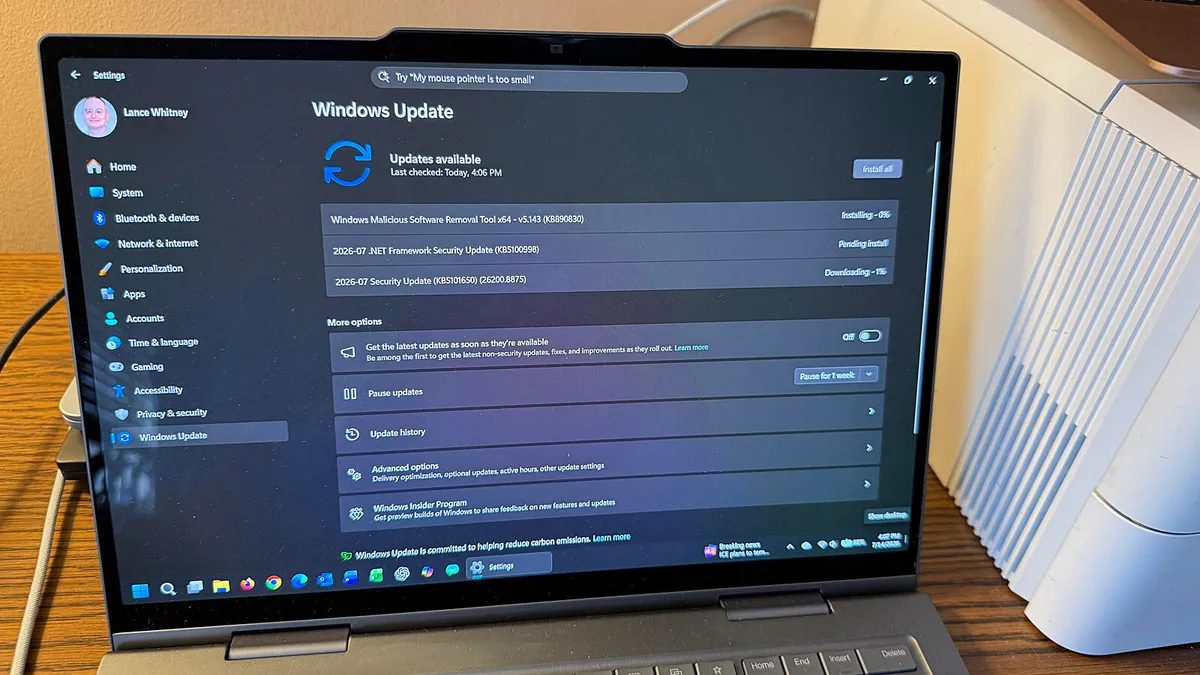
Photo: ZDNet
Quick answer
Microsoft patched 570 Windows vulnerabilities in its July update, including two actively exploited zero-days.
Microsoft has released its July security update for Windows 11 and Windows 10, patching a record 570 vulnerabilities. This marks the highest number of fixes in a single month in the company’s history, surpassing previous records of 206 in June and 164 in April.
Among the patched vulnerabilities, three are zero-day flaws, two of which were already actively exploited by attackers. One affects Active Directory, while the other targets SharePoint, making them particularly dangerous for enterprise users. The third zero-day vulnerability, related to BitLocker, allows bypassing encryption with physical access to a device, posing risks to data on lost or stolen devices.
Microsoft attributes the increase in detected vulnerabilities to the use of artificial intelligence. The company’s internal AI-powered tool, MDASH, helps identify vulnerabilities faster and reduces the time to patch them. This approach minimizes the risk of zero-day exploitation before fixes are released.
In addition to security fixes, the update includes functional improvements for Windows. File Explorer now operates faster and more reliably, especially when working with virtual disks. Bluetooth performance has also been enhanced: device connections, such as AirPods, are quicker, and microphone reliability on Beats Studio Pro headphones has improved. Printer setup has been simplified through the use of the Internet Printing Protocol.
The update is automatically downloaded and installed on devices, but a restart is required to apply the changes. Users can manually check for updates in Windows Settings. It is worth noting that updates are temporarily paused for some Dell devices with Intel processors due to compatibility issues.
Common questions
- What are zero-day vulnerabilities, and why are they dangerous?
- Zero-day vulnerabilities are flaws unknown to vendors that attackers exploit before patches are released. They pose severe risks because they provide a window of opportunity for cybercriminals until fixes are available.
- Which vulnerabilities were fixed in this update?
- The update addresses three zero-day flaws: two actively exploited (in Active Directory and SharePoint) and one publicly disclosed (in BitLocker). Additionally, 61 critical vulnerabilities were resolved.
- How do I install Windows security updates?
- Updates are typically installed automatically but require a device restart. Users can manually check for updates via 'Settings' → 'Windows Update'.
Dzen feed: /feed/dzen.xml · RSS: /feed.xml