
NASA and General Atomics Develop Nuclear Engine for Mars Missions
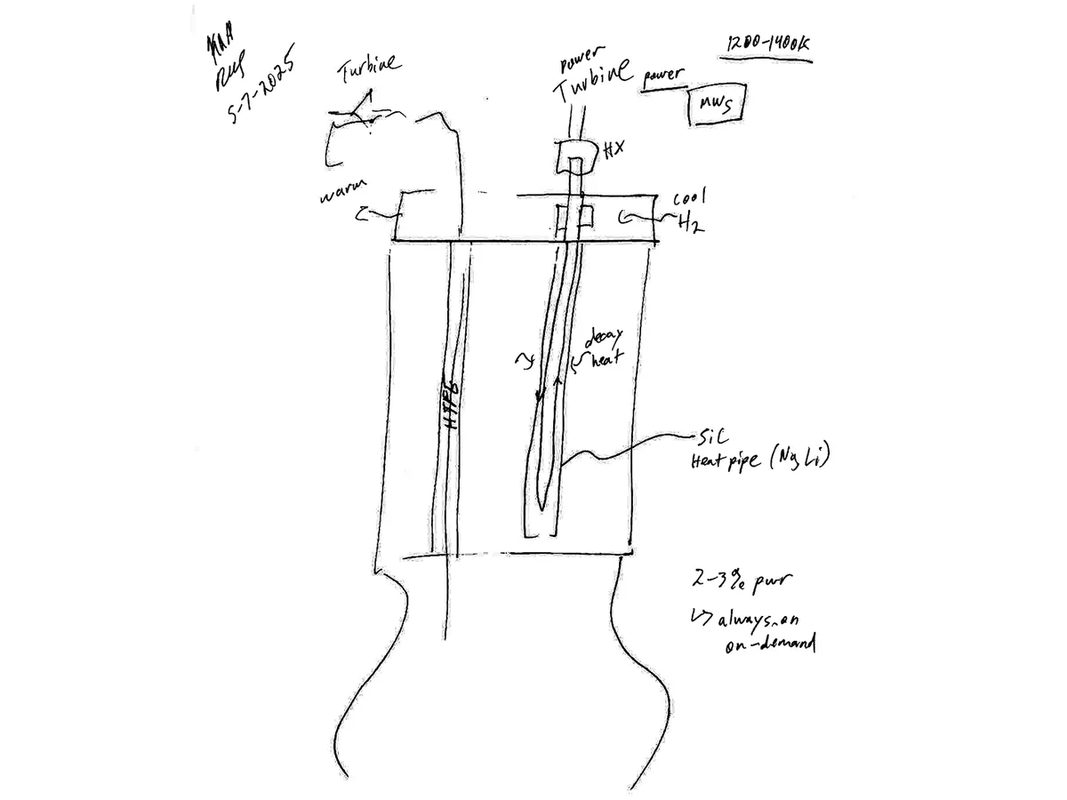
Photo: IEEE Spectrum
Quick answer
NASA and General Atomics proposed a synchronous bimodal nuclear engine concept for Mars missions, capable of halving travel time.
Engineers at NASA and General Atomics Electromagnetic Systems have unveiled a concept for a new type of nuclear rocket engine that could become a cornerstone for future Mars missions. The idea originated during an informal conversation at a conference, where specialists sketched initial concepts on a napkin. Despite its simplicity, the project relies on proven technologies and promises to revolutionize interplanetary travel.
The Synchronous Bimodal Nuclear Rocket (SBNR) engine combines the advantages of nuclear thermal propulsion (NTP) and electric propulsion (NEP). According to developers' calculations, this system could halve Mars travel time—from the traditional 6-9 months to just 3-4. This not only accelerates crew delivery but also reduces exposure to cosmic radiation and microgravity, which is critical for long-duration missions.
The project's technological foundation is based on existing solutions. While NTP and NEP are well understood, their integration into a single system presents a non-trivial challenge. As IEEE Spectrum editor Stephen Cass notes, the key difficulty lies in merging these technologies without compromising efficiency. Nevertheless, preliminary calculations show the approach’s promise.
Currently, the project is in the conceptual design phase. The authors are calling on the expert community to discuss and refine the idea. Over the coming years, engineers must overcome technical and technological hurdles before SBNR can be implemented in practice. If successful, this engine could become the foundation for future crewed missions not only to Mars but beyond.
Common questions
- How will the nuclear engine accelerate Mars missions?
- The synchronous bimodal engine combines nuclear thermal and electric propulsion, reducing travel time from the traditional 6-9 months to just 3-4 months.
- What technologies underpin the new engine?
- The project leverages mature nuclear thermal and electric propulsion technologies but requires their integration into a unified system.
Dzen feed: /feed/dzen.xml · RSS: /feed.xml