
Gemini’s New Design Raises Concerns Over Android’s Future UI
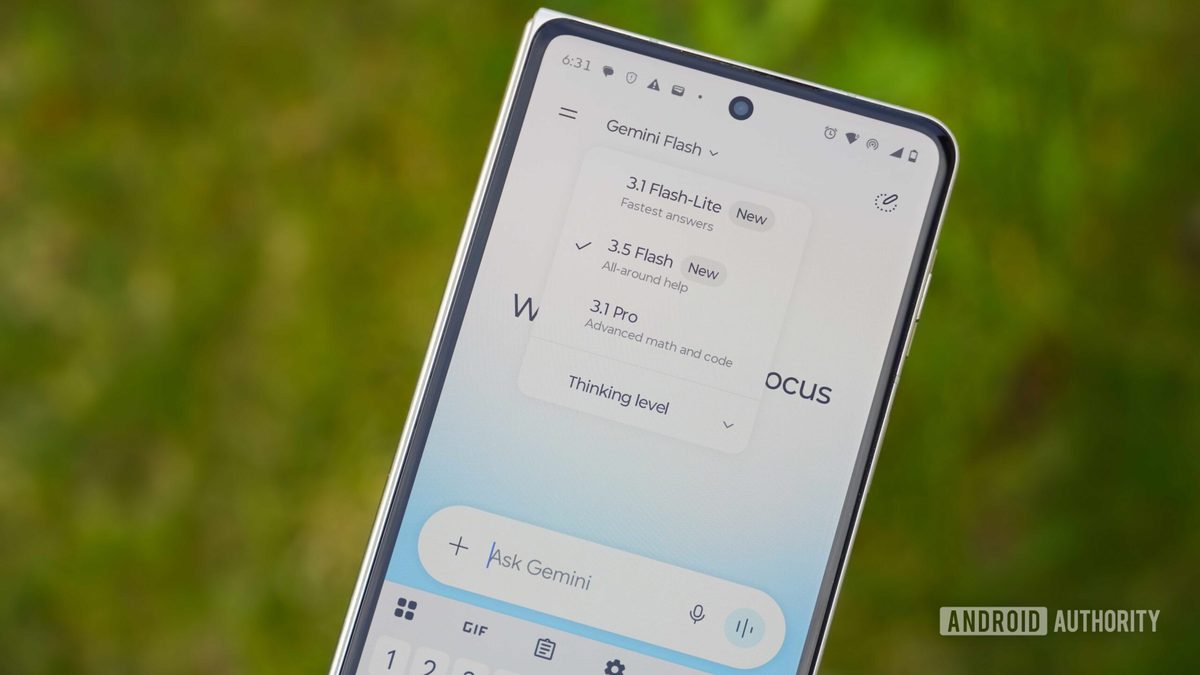
Photo: Android Authority
Quick answer
Google’s ‘Neural Expressive’ redesign for Gemini introduces dynamic typography and adaptive UI elements but faces criticism for reduced readability and illogical feature placement.
Google has begun rolling out its new ‘Neural Expressive’ design in the Gemini app, now available on mobile and desktop browsers. The company positions this update as the backbone for future Android ‘smart’ features, including integrations with food delivery services and third-party apps. However, the redesign has sparked mixed reactions, with users and experts highlighting usability concerns alongside visual improvements.
One of the most noticeable changes is typography. Instead of introducing a new font, Google opted to refine Roboto by ‘lightening’ it significantly. While the font adapts dynamically—bold for key elements and thin for secondary text—the default appearance is now too faint, especially on smaller screens. Additionally, developers have relocated critical interface elements: the model selector now sits at the top of the screen rather than beside the input field.
The account-switching mechanism has faced particularly harsh criticism. Previously, users could toggle between personal and work profiles via a gesture from the top-right corner. The new design requires opening a side panel, selecting an account, waiting for the app to reload, and repeating the process as needed. This disrupts workflows and increases time spent on routine tasks. Experts warn that similar changes could appear in other Google apps, further degrading the user experience.
Despite the backlash, ‘Neural Expressive’ isn’t without merits. The update introduces smoother animations, enhanced color schemes for light/dark modes, a more responsive microphone, and an integrated ‘Live mode.’ Yet, instead of focusing on these improvements, Google has introduced contentious layout changes that have remained static for years. This forces users—especially those who don’t frequently update—to relearn the interface, creating friction in daily use.
Common questions
- What is ‘Neural Expressive’ in Gemini?
- A new design system from Google, deployed in the Gemini app and other products. It features dynamic typography and responsive UI elements but has drawn complaints for usability trade-offs.
- Why is the new Gemini design raising concerns?
- Changes disrupt established interaction patterns: critical elements like account switches are relocated, thin fonts reduce readability, and menus become less intuitive, forcing users to adapt.
- How will the Gemini update impact Android?
- Google plans to use ‘Neural Expressive’ as the foundation for future Android ‘smart’ features, potentially leading to widespread UI changes across the system and its apps.
Dzen feed: /feed/dzen.xml · RSS: /feed.xml