
New Context Compression Method for LLMs Cuts Input Data 16x Without Accuracy Loss
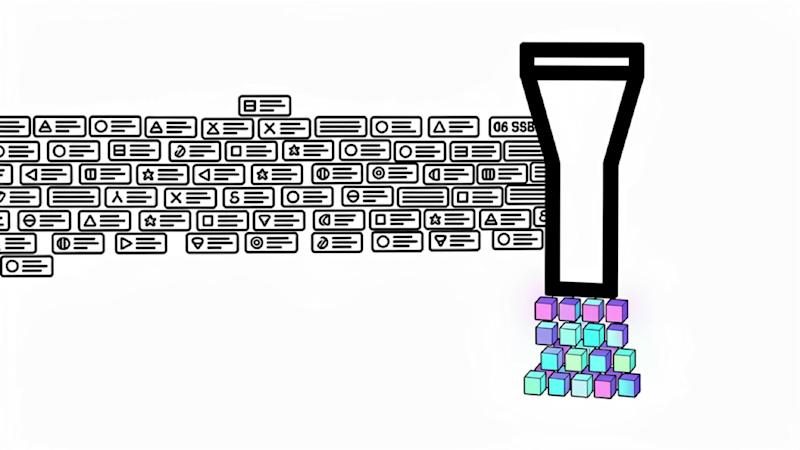
Photo: images.ctfassets.net
Quick answer
Researchers introduced Latent Context Language Models (LCLM), a method that compresses LLM input data by 16x, accelerating processing by 8.8x on the RULER benchmark without significant accuracy loss.
A research team from New York University, Columbia University, Princeton, the University of Maryland, Harvard, and Lawrence Livermore National Laboratory has introduced a new context compression method for large language models (LLMs). The technology, called Latent Context Language Models (LCLM), reduces input data volume by 16x while maintaining high model accuracy. This addresses one of the key challenges in modern LLMs—the surge in computational costs as context length increases.
Unlike traditional KV-cache compression methods, which require full data loading before compression, LCLM compresses input tokens before decoder processing. This directly reduces memory and computational resource demands. On the RULER benchmark, the 16x compression model demonstrated an 8.8x processing speedup compared to baseline methods. Accuracy loss was minimal: from 94.41% without compression to 75.06% when removing 93.75% of input tokens.
The LCLM architecture includes a 0.6B-parameter encoder and a 4B-parameter decoder. The encoder converts input token blocks into shorter latent embedding sequences, which are then processed by the decoder. Training was conducted on over 350B tokens using three data types: continuous pretraining, fine-tuning data, and auxiliary reconstruction tasks. This balanced data recovery accuracy with overall model performance.
Developers emphasize that LCLM integrates easily into existing stacks and can replace standard LLMs by preprocessing input data through the model compressor. However, full deployment in agent systems requires RAG pipeline tuning and real-world load testing. Source code and models are available on HuggingFace and GitHub.
For enterprises using LLMs, the new method offers significant cost reductions in inference. With 1M-token contexts, traditional KV-cache compression methods exceed the capabilities of a single H200 GPU. LCLM remains functional even at such scales, making it a promising solution for infrastructure scaling.
Common questions
- What is Latent Context Language Models (LCLM)?
- LCLM is a family of context compression models for large language models that reduce input data volume before decoder processing. This lowers memory and computational load without significant accuracy loss.
- What are the benefits of 16x context compression?
- At 16x compression, LCLM accelerates data processing by 8.8x compared to traditional KV-cache compression methods. This reduces computational costs and enables handling longer contexts without performance degradation.
- Can LCLM be integrated into existing systems?
- Yes, LCLM is designed for seamless integration into existing stacks. They can replace standard LLMs by preprocessing input data through the model compressor.
Dzen feed: /feed/dzen.xml · RSS: /feed.xml