
Panasonic PV-460: How the First Video Stabilizer Transformed the Industry
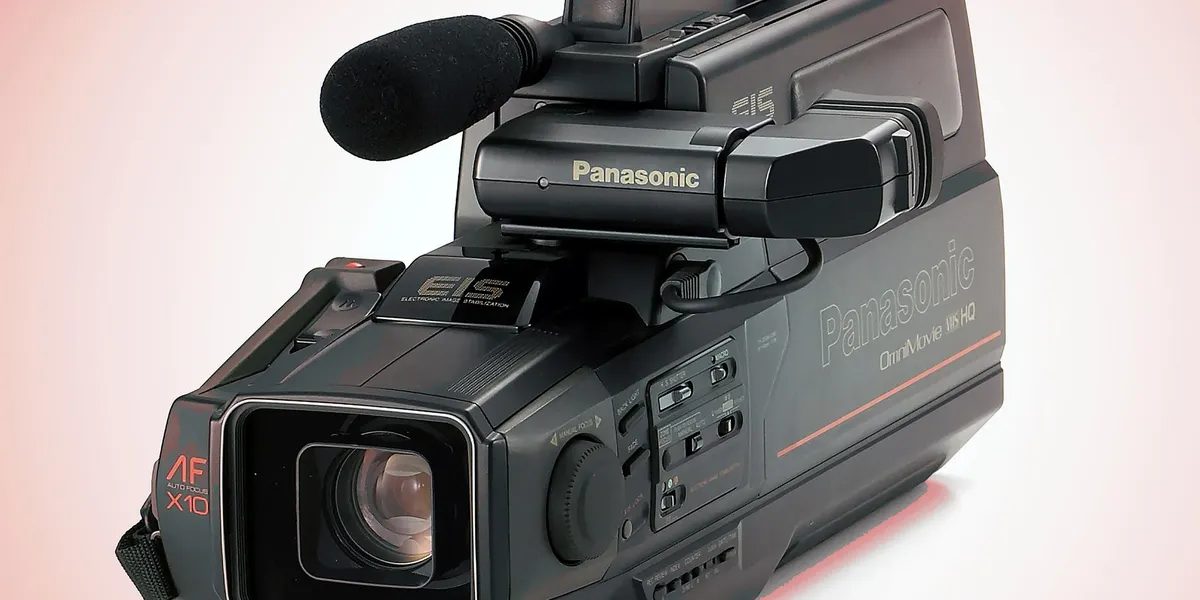
Photo: IEEE Spectrum
Quick answer
The Panasonic PV-460 (1988) became the first camcorder with optical image stabilization, eliminating shaky footage for users.
In the 1980s and 1990s, shooting home videos with handheld cameras often resulted in unstable footage. Users had to rely on tripods or specialized stabilizers to avoid shaky recordings. The situation changed in 1988 when Panasonic released the PV-460—the first camcorder with optical image stabilization. This technology automatically compensated for operator movements, delivering smooth footage without additional equipment.
The development of the PV-460 was made possible by several technological breakthroughs. In 1956, Durst introduced a camera with automatic exposure, and in 1973, Honeywell engineer Norman Stauffer invented autofocus. These innovations simplified filming, but the issue of shaky footage persisted. Panasonic’s team, led by researcher Mitsuaki Oshima, created a miniature gyroscope and an optical axis correction mechanism, which formed the basis of the PV-460’s stabilizer.
The technology quickly gained popularity and recognition at the 1988 Consumer Electronics Show. In 1989, Panasonic received the R&D 100 Award for "developing a VHS camcorder with an anti-shake mechanism." The stabilization patent was licensed to other manufacturers, making it a standard for camcorders, smartphones, and drones. In July 2024, the PV-460 was awarded IEEE Milestone status, acknowledging its contribution to video technology.
Common questions
- What is optical image stabilization?
- Optical image stabilization is a technology that compensates for camera shake by adjusting the position of lenses or sensors. The PV-460 used a miniature gyroscope to detect movements and a mechanism to correct the optical axis.
- Why is the PV-460 considered a revolutionary model?
- The PV-460 was the first to integrate stabilization into consumer camcorders, making smooth video recording accessible to non-professionals. The technology became an industry standard and is now used in devices from smartphones to professional cameras.
- What technologies preceded the PV-460?
- Key predecessors included automatic exposure (Durst, 1956) and autofocus (Honeywell, 1973). These innovations simplified filming, while the PV-460 combined them with stabilization for the first time.
Dzen feed: /feed/dzen.xml · RSS: /feed.xml