
ALS Patient Becomes First 'Advanced User' of Speech Implant
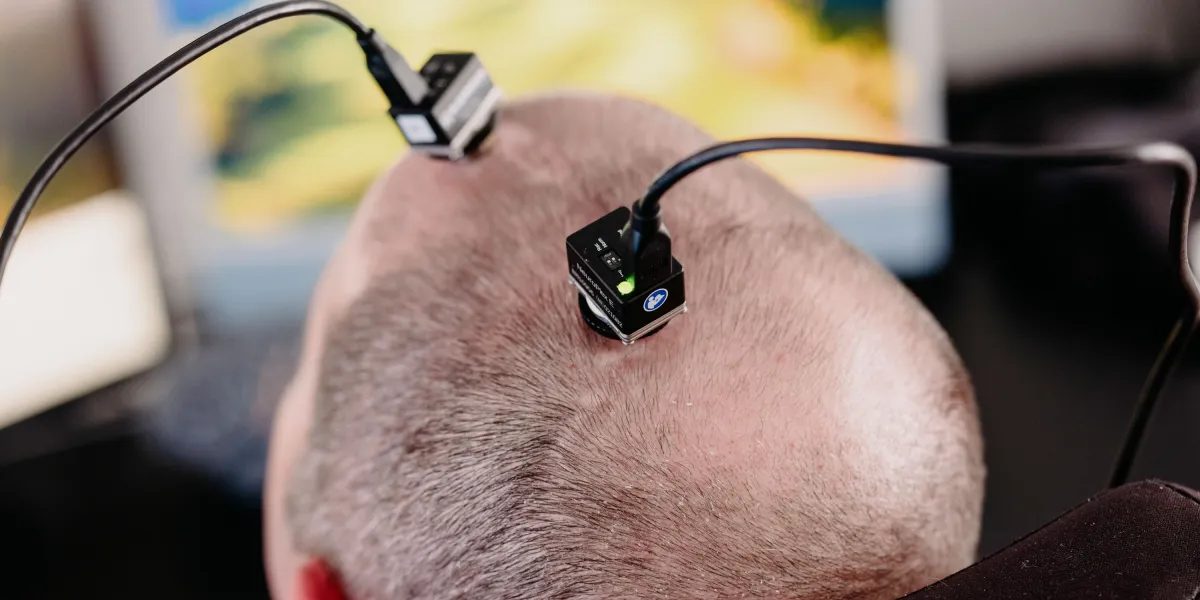
Photo: MIT Technology Review
Quick answer
A neural interface using implanted electrodes enables an ALS patient to communicate by decoding brain activity into speech with 97.5% accuracy.
Scientists from the University of California, Davis, have achieved a breakthrough in neural interface technology by creating an implantable device that enables an ALS patient to communicate using synthesized speech. The technology decodes brain signals responsible for speech movements and converts them into words.
During a five-hour surgery, the patient received four arrays of 64 electrodes each, connected to external ports on the skull. These electrodes record activity from the speech motor cortex—the brain region controlling articulation. Algorithms process the signals, mapping them to 39 phonemes of the English language, and convert them into words.
Within a month of implantation, the patient could use the device for communication. On the first day, the system recognized 50 words with 99.6% accuracy. Later, the vocabulary expanded to 125,000 words with 97.5% accuracy. Over 22.6 months, the patient used the implant for over 3,800 hours at home without researcher involvement, confirming its reliability and ease of use.
Developers emphasize that this technology opens new possibilities for individuals with severe motor impairments, allowing them to regain lost communication abilities. In the future, such systems could become a standard in rehabilitating patients with neurological conditions.
Common questions
- How does the speech-restoring implant work?
- The device reads activity from the brain's speech motor cortex using electrodes, decodes signals into phonemes, and converts them into words. Algorithms are trained on the patient's individual data to enhance accuracy.
- How accurate is the speech neural interface?
- In trials, the system achieved 97.5% word recognition accuracy with a vocabulary of 125,000 words. Initially, it reached 99.6% accuracy with a limited set of 50 words.
- Who can benefit from this technology?
- This technology is designed for individuals with severe neurological conditions like ALS who have lost the ability to speak due to motor function impairment.
Dzen feed: /feed/dzen.xml · RSS: /feed.xml