
Why China Is Betting Big on Large Nuclear Reactors
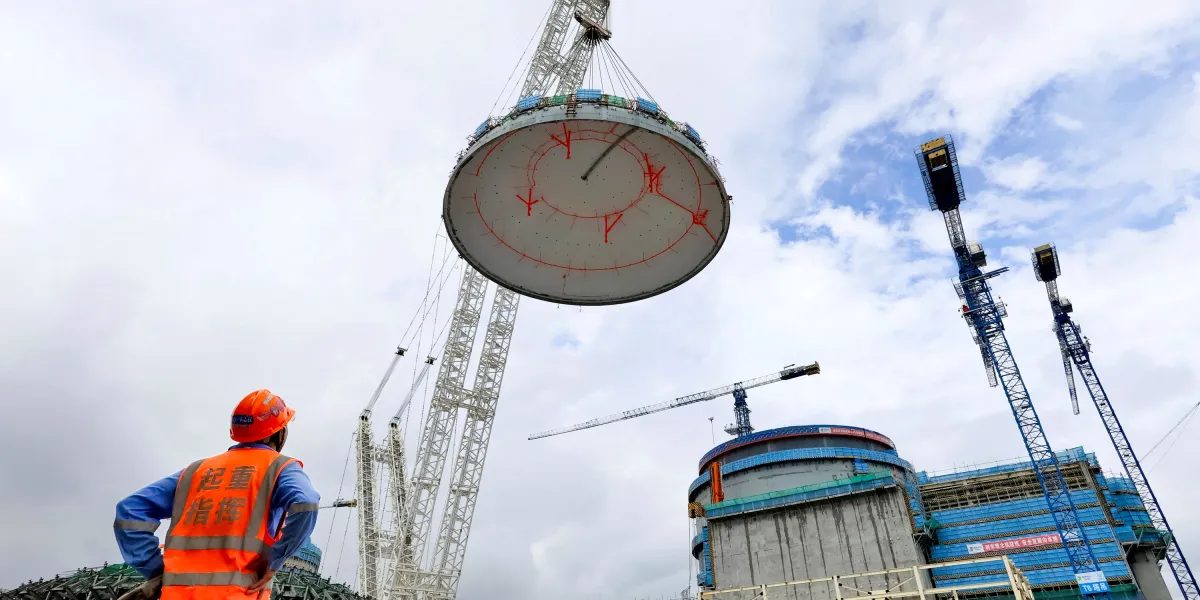
Photo: MIT Technology Review
Quick answer
China is aggressively developing large nuclear reactors, commissioning multiple new units, while the U.S. and Europe focus on small modular reactors (SMRs) to reduce costs and accelerate deployment.
China is rapidly scaling up its nuclear energy capacity by commissioning large reactors, while Western nations struggle to execute similar projects. Over the past few years, the country has brought dozens of new units online, whereas the U.S. has only added two—at the Vogtle plant in Georgia. France, long reliant on nuclear energy, connected its first new reactor to the grid in December 2024 for the first time in over two decades.
Constructing large nuclear facilities remains an enormous challenge. Initial investments run into billions of dollars, with payback periods stretching decades. Projects often face design changes and regulatory obstacles, leading to cost overruns and delays. As a result, many nations are exploring alternative solutions to accelerate carbon-free energy development.
Small modular reactors (SMRs) have emerged as a promising alternative. Their compact size reduces upfront costs and simplifies construction. These reactors can be factory-assembled and transported to installation sites, significantly shortening project timelines. The U.S. has already launched pilot programs to test this technology, with the Department of Energy aiming to bring three experimental reactors online by July 2026.
Despite growing interest in SMRs, large reactors remain the backbone of nuclear energy in countries with established infrastructure. France and the U.S., home to the world’s largest nuclear fleets, are not yet ready to abandon traditional solutions, though they acknowledge the need for industry modernization. The question of which strategy will prove more effective in the long term remains unresolved.
Common questions
- Why are large nuclear reactors difficult to build?
- Large reactors require multi-billion-dollar investments, complex engineering, and lengthy construction timelines. Design changes and regulatory hurdles often drive up costs and delays.
- What are small modular reactors (SMRs)?
- SMRs are compact nuclear reactors assembled in factories and transported to installation sites. They require lower upfront investments and can be deployed faster than traditional large reactors.
- Which countries lead in nuclear energy?
- The U.S. has the largest fleet of nuclear reactors, followed by France, where nuclear power supplies about two-thirds of the country’s electricity. However, new projects in these nations have been rare in recent years.
Dzen feed: /feed/dzen.xml · RSS: /feed.xml