
Record-Breaking Underwater Tunnel and Flexible Data Centers: Infrastructure Innovations
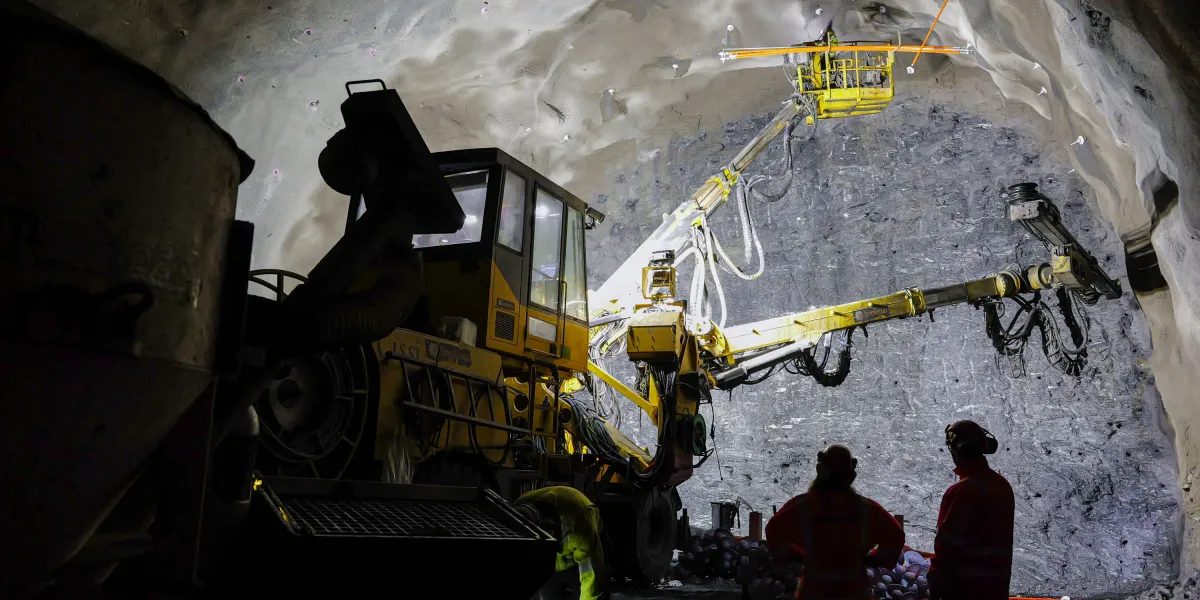
Photo: MIT Technology Review
Quick answer
Norway is constructing the record-breaking Rogfast underwater tunnel, spanning 26.7 km and descending to 392 meters.
Norway has embarked on one of the world’s most ambitious infrastructure projects—the construction of the Rogfast underwater tunnel. Spanning 26.7 kilometers, this structure will become not only the longest but also the deepest underwater tunnel for road traffic. Its maximum depth will reach 392 meters below the North Sea, requiring cutting-edge engineering solutions to ensure safety and structural longevity.
The Rogfast project aims to address transportation challenges between the country’s regions, reducing travel time and improving connectivity. Engineers face numerous challenges, including high water pressure, complex geological conditions, and the need for ventilation throughout the tunnel. Construction employs advanced drilling and rock reinforcement technologies, setting a benchmark for future underwater projects.
Meanwhile, the IT industry is embracing the concept of flexible data centers. With the rapid growth of energy demand driven by AI and cloud technologies, companies are seeking ways to optimize electricity consumption. Instead of building new power plants or upgrading grids, software solutions enable data centers to temporarily reduce energy use during peak demand periods.
A new generation of energy management software makes this process more precise and efficient. Algorithms analyze real-time grid load and automatically adjust equipment operations without compromising critical tasks. This approach not only reduces strain on infrastructure but also helps companies save on energy costs, a crucial advantage amid rising utility rates.
Common questions
- What is the Rogfast underwater tunnel?
- It is the world’s longest and deepest underwater road tunnel, currently under construction in Norway. The tunnel will span 26.7 km and reach a maximum depth of 392 meters below sea level.
- How do flexible data centers support energy systems?
- They use specialized software to temporarily reduce energy consumption during peak demand periods, preventing grid overloads and delaying the need for new power plants.
- Why is data center flexibility critical for AI?
- AI technologies significantly increase energy demand. Flexible data centers enable efficient power distribution without requiring large-scale infrastructure changes, ensuring stability and cost savings.
Dzen feed: /feed/dzen.xml · RSS: /feed.xml