Snowflake Introduces AI Model Auto-Routing to Cut Costs
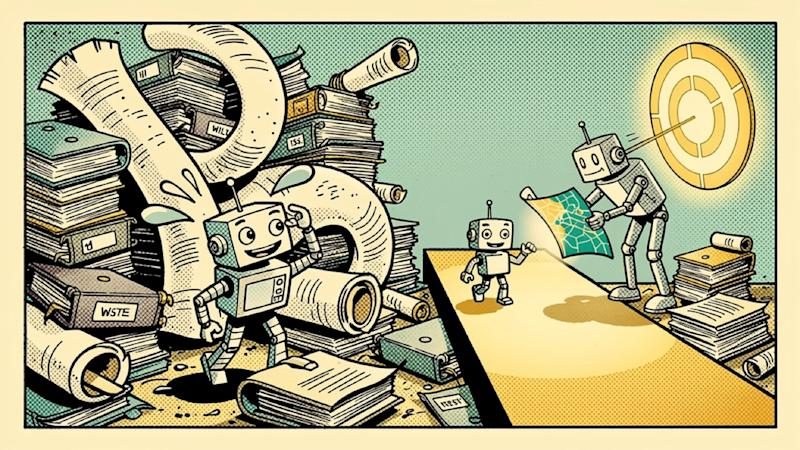
Photo: images.ctfassets.net
Quick answer
Snowflake launched AI model auto-routing in Cortex AI Gateway to optimize token costs by up to 3x through intelligent workload distribution.
Large enterprises scaling AI agents face a critical inefficiency: a single model can’t handle all tasks optimally. Powerful models are overkill for simple queries, while weaker ones struggle with complex workloads. Snowflake’s solution is automatic model routing, which dynamically selects the best model for each request. Integrated into its Cortex AI Gateway, the feature lets customers switch from fixed models to an 'auto' mode that optimizes performance and cost.
The technology employs two key mechanisms: a lightweight model attempts the task first, escalating to a more powerful one if needed. Simultaneously, a classifier trained on historical requests directs simple tasks to less resource-intensive models. Customers can manually restrict model choices, and routing incurs no additional fees—costs depend solely on token usage.
Security and access control are also prioritized. The routing system integrates with existing access management tools, ensuring compliance with data storage and protection policies. For instance, open models can run in customer regions, while the recently acquired Natoma platform enhances agent access rights management.
Competitors like Databricks, AWS, Google Cloud, and Nvidia are also advancing similar routing technologies. However, Snowflake emphasizes seamless integration with existing data management systems and enterprise-grade security compliance. Experts note that the choice of router depends heavily on a company’s existing data governance framework.
Common questions
- What is AI model auto-routing?
- A technology that automatically selects the most cost-effective AI model for each task based on performance, cost, and security requirements. This minimizes expenses while ensuring optimal efficiency.
- How does Snowflake implement model routing?
- Snowflake uses a two-step process: a small model attempts the task first, escalating to a larger one if needed. A request history-based classifier further refines routing. Customers can enable the 'auto' mode for seamless distribution.
- What business benefits does auto-routing provide?
- It cuts token costs by up to 3x, enhances access control, and ensures compliance with security policies. The system prevents overuse of expensive models for trivial tasks, improving ROI.
Dzen feed: /feed/dzen.xml · RSS: /feed.xml