
Robot Competitions Test Hotel Service Skills: Speed and Autonomy in Focus
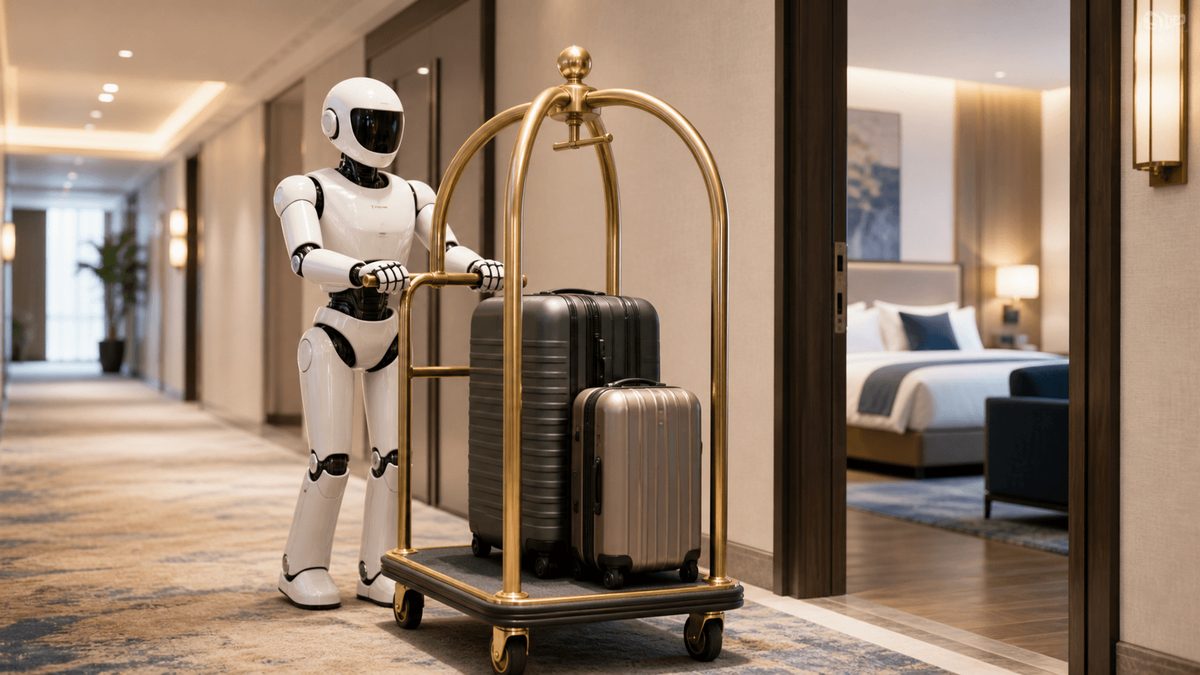
Photo: Pandaily
Quick answer
Beijing hosted humanoid robot competitions testing hotel service skills: luggage handling, room restocking, and bed-making within 30 minutes.
Beijing hosted the second World Humanoid Robot Games, where humanoid robots competed in hotel service tasks. The event took place at the Wuzhou Hotel on August 16–17 and included trials focused on speed, precision, and autonomy.
Participants had 30 minutes to complete three key tasks: move luggage, restock rooms, and make beds. The competition was held in real hotel conditions, allowing robots' indoor navigation, manipulation of objects of varying shapes and weights, and multi-step task planning to be rigorously evaluated.
Autonomy was a critical factor. Robots operating without operator intervention earned the highest scores (1.0), while remotely controlled solutions scored lower (0.5). This highlights the importance of developing fully autonomous systems for service industry applications.
The competition served as a platform to showcase advancements in robotics and AI, as well as the potential for integrating such solutions into everyday business processes. The test results may lay the groundwork for further automation in the hospitality industry.
Common questions
- What tasks did the robots perform during the competition?
- Robots moved luggage, restocked rooms, and made beds. All actions were completed in a real hotel environment within a strict time limit.
- How was robot autonomy evaluated?
- Fully autonomous robots scored the highest (1.0), while remotely controlled devices received lower scores (0.5).
- Which skills were tested in the robots?
- Competitions assessed load balancing during transport, object grip precision, indoor navigation, and the ability to plan sequential tasks.
Dzen feed: /feed/dzen.xml · RSS: /feed.xml