
Vivodyne Startup: How Robots and AI Can Accelerate Drug Discovery
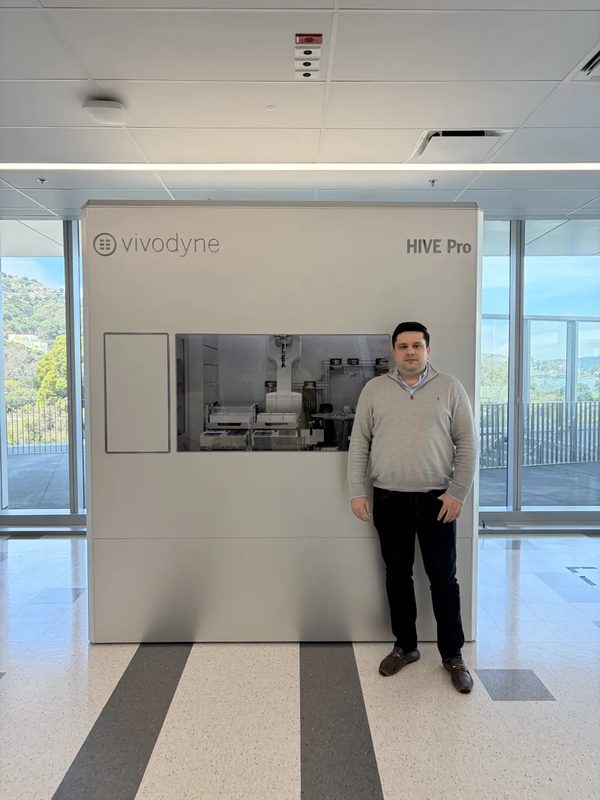
Photo: TechCrunch
Quick answer
Vivodyne has developed HIVE robotic labs to generate human tissue data, improving AI model accuracy in pharmaceutical research.
American startup Vivodyne, spun off from the University of Pennsylvania in 2021, offers a solution to a critical challenge in AI-driven drug discovery. Founder Andrei Georgescu argues that modern AI models lack sufficient data to accurately simulate human biology, as they primarily train on animal test results or isolated cells.
To address this, Vivodyne developed HIVE robotic labs capable of autonomously cultivating 20 types of human tissues, conducting experiments, and analyzing outcomes. The company claims its technology generates data closely aligned with real biological processes. For instance, lab-grown liver cells achieve 94% accuracy in predicting toxicity compared to human clinical trials.
Vivodyne has already secured $80 million in funding and operates the world’s largest “human biology data center” near San Francisco. According to Georgescu, the company’s throughput now exceeds all animal testing conducted in the U.S. Vivodyne collaborates with major pharmaceutical corporations to expedite drug development and reduce clinical trial costs, which often exceed tens of millions of dollars.
Georgescu envisions a future where AI models are trained on causal data, enabling them to understand not just static cell states but dynamic biological changes. This could unlock breakthroughs in complex therapies, particularly for diseases requiring combination treatments.
Common questions
- Why are existing AI models ineffective in drug development?
- Current AI models rely on data from animal tests or isolated cells, which fail to capture the complexity of human biology. This limits their ability to predict drug efficacy and safety in humans.
- How does Vivodyne address the data shortage?
- The company’s HIVE robotic labs autonomously grow human tissues and conduct experiments, generating high-fidelity biological data. This provides AI models with more accurate and relevant training datasets.
- What results has Vivodyne achieved so far?
- Lab-grown tissues from Vivodyne demonstrate exceptional accuracy: liver cells predict toxicity with 94% precision, while bone marrow matches 100% of clinical trial outcomes across 20 chemotherapy drugs.
Dzen feed: /feed/dzen.xml · RSS: /feed.xml