
Startup to Launch First Space-Based Solar Light Reflector
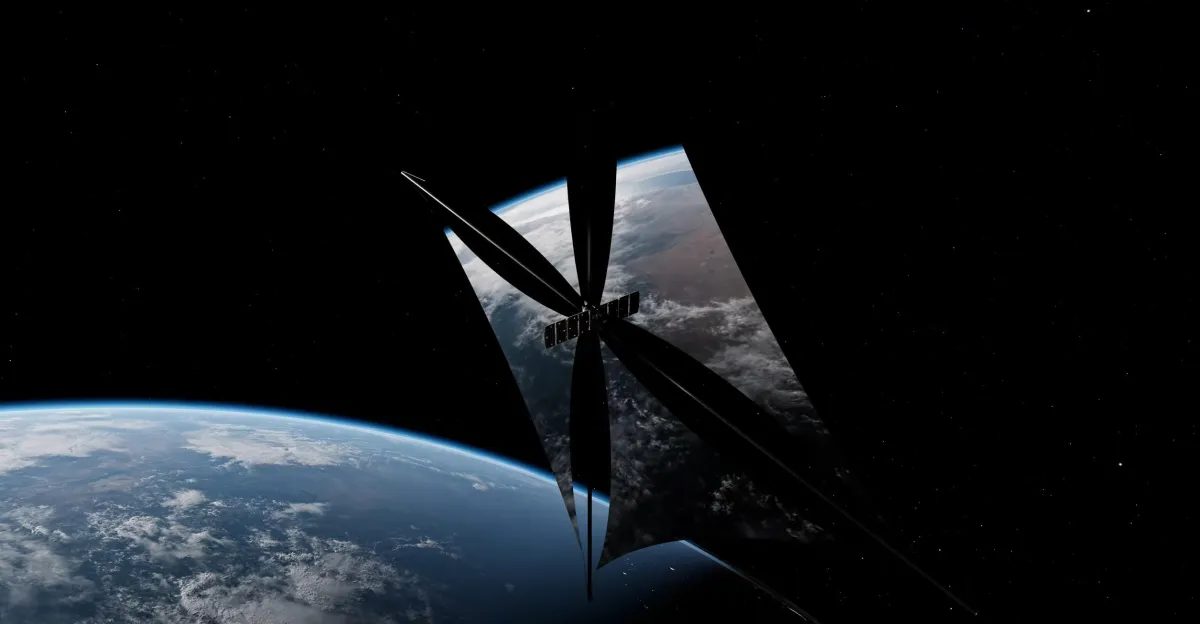
Photo: The Verge
Quick answer
Reflect Orbital is deploying the Eärendil-1 satellite to reflect sunlight onto Earth at night. The technology could benefit energy, agriculture, and disaster response but raises concerns among astronomers about…
California-based startup Reflect Orbital has received approval from the U.S. Federal Communications Commission (FCC) to launch its experimental satellite, Eärendil-1. Named after a character from J.R.R. Tolkien’s works, the spacecraft will be the first space-based reflector capable of directing sunlight to Earth at night.
The satellite features an 18-meter mirror surface. If the test launch succeeds, the company plans to deploy a constellation of 50,000 similar satellites by 2035. The reflected light could illuminate areas up to 5 kilometers wide, offering potential applications in solar energy, agriculture, and emergency response.
However, the project has faced opposition from the scientific community. Astronomical organizations, including the American Astronomical Society and the European Southern Observatory, have expressed concerns that the reflected light may interfere with space observations. Critics also highlight potential risks to wildlife and aviation safety due to disruptions in natural light cycles.
Despite the criticism, Reflect Orbital continues to advance the project, emphasizing its potential to reduce carbon footprints and improve the efficiency of nighttime operations. The launch of Eärendil-1 is scheduled for late 2024.
Common questions
- How does Reflect Orbital’s reflector satellite work?
- The satellite is equipped with a mirror surface that redirects sunlight to specific areas on Earth during nighttime, providing illumination without additional energy sources.
- Which industries could benefit from this technology?
- The technology could enhance solar energy, agriculture, construction, and emergency response by delivering on-demand lighting solutions.
- Why is the project facing criticism?
- Astronomers fear the reflected light may disrupt space observations, while ecologists and aviation experts warn of risks to wildlife and flight safety due to disrupted natural light cycles.
Dzen feed: /feed/dzen.xml · RSS: /feed.xml