
NASA Intern Trains Robots for Space Equipment Assembly
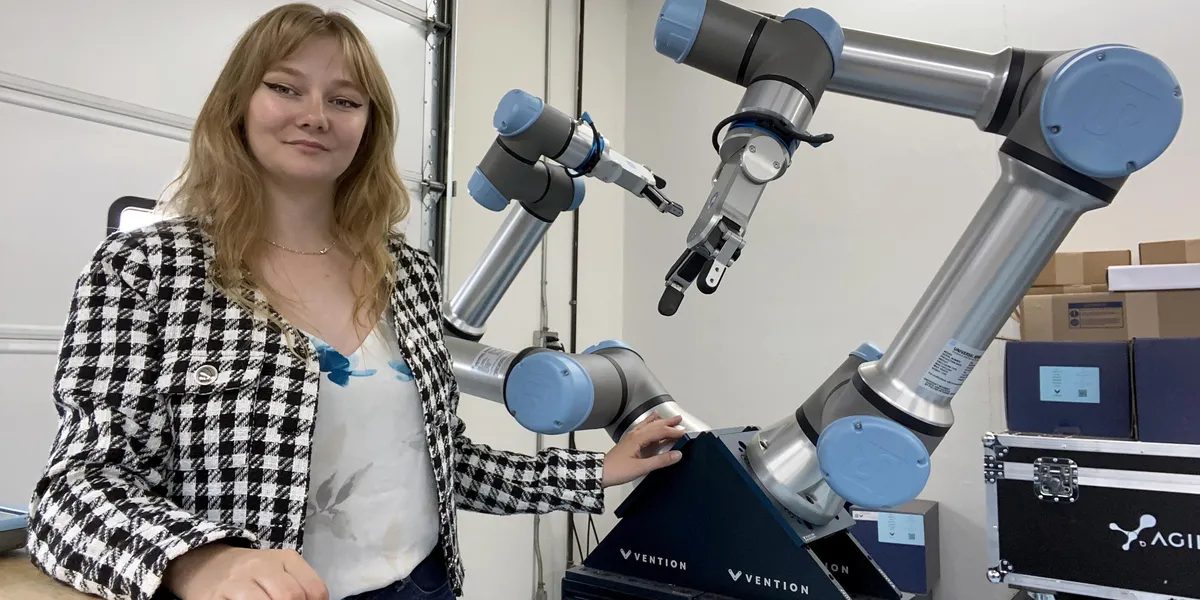
Photo: IEEE Spectrum
Quick answer
PhD student Sara Downs is developing a NASA-backed force-torque control system for robotic assembly of satellite antennas in microgravity, eliminating camera dependency and minimizing spacecraft displacement risks.
Sara Downs, a PhD student at Texas A&M University, is working on a project that could revolutionize spacecraft assembly. Her research focuses on creating a robotic system capable of mounting antennas on satellites in microgravity. Unlike conventional solutions that rely on cameras for positioning, her method uses force-torque sensors, allowing the robot to 'feel' the position of components.
The key challenge of the project is accounting for manipulator reaction torques. In space, even minor forces can displace a satellite, so Downs' system calculates compensating impulses to keep the spacecraft stationary. This is particularly critical for future missions involving satellite servicing or upgrades in orbit.
The development is conducted at RAD Lab, co-founded by NASA veteran Robert Ambrose. The lab specializes in robotics for extreme environments and maintains close collaboration with the space agency. After completing her dissertation, Downs plans to join NASA, where she hopes to contribute to projects involving Mars rovers and robotic manipulators for space stations.
Beyond her academic work, Downs is actively involved in the IEEE professional community, organizing student-focused events. She emphasizes that participation in such initiatives helps young engineers build industry connections and secure jobs in a highly competitive job market.
Common questions
- What problem does Sara Downs' robotic system solve?
- The system enables robots to assemble satellite antennas in microgravity using force-torque sensors for precise component positioning, eliminating camera dependency and reducing spacecraft displacement risks during assembly.
- Why is accounting for reaction torques critical in space assembly?
- In microgravity, any manipulator movement generates reaction torques that can displace the satellite. Downs' technology compensates for these forces, preventing uncontrolled spacecraft movement.
- Where is this technology being tested?
- The development takes place at the Robotics and Automation Design (RAD) Lab at Texas A&M University, which collaborates with NASA and specializes in robotics for extreme environments.
Dzen feed: /feed/dzen.xml · RSS: /feed.xml