
Euclid Telescope Captures Most Detailed Photo of Milky Way's Core
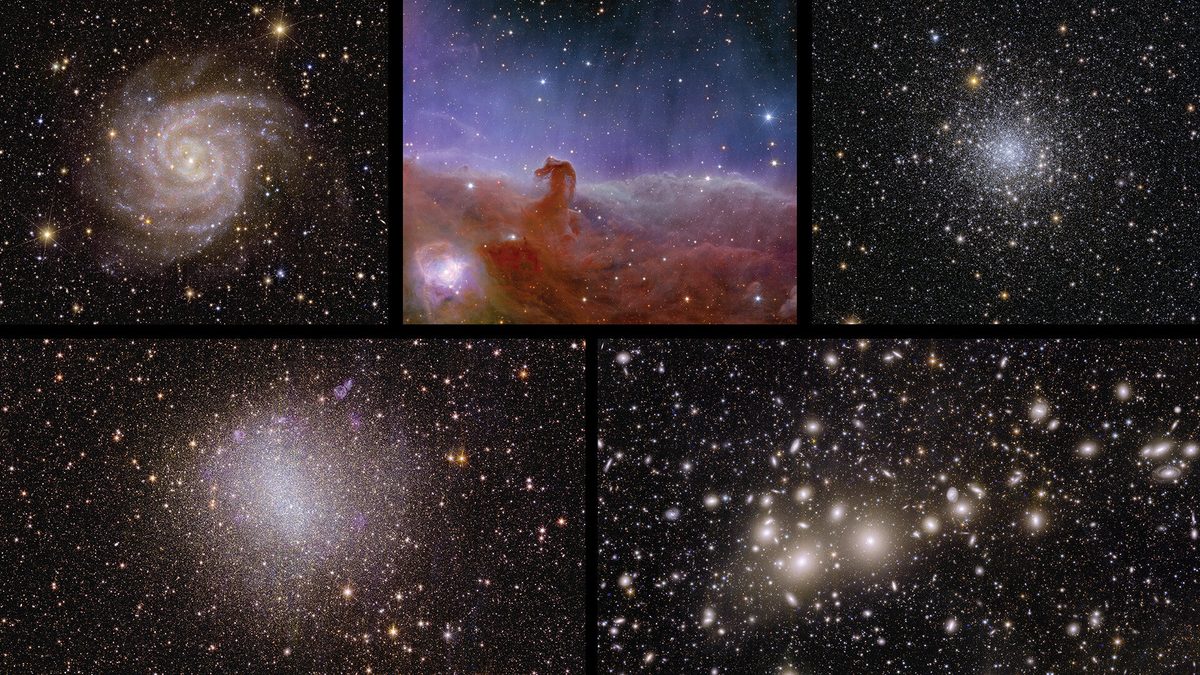
Photo: esa.int
Quick answer
The Euclid space telescope has set a new benchmark by imaging the Milky Way's center with over 60 million stars in stunning detail.
The European Space Agency's Euclid telescope, launched to study dark matter and the universe's structure, has captured a groundbreaking image of the Milky Way's central region. The photo reveals over 60 million stars, setting a new record for such observations.
The galaxy's core is one of the densest and most active areas, where stars are packed thousands of times closer together than in the vicinity of the Solar System. This new image enables astrophysicists to analyze star distribution, movement, and interactions in unprecedented detail.
Equipped with high-precision instruments, Euclid can detect even faint light sources. This capability opens new avenues for studying visible matter and dark energy, which influences galactic evolution.
The observations will help scientists better understand processes in the Milky Way's nucleus, including star cluster formation and black hole dynamics. Euclid's data is expected to fuel numerous future research projects.
Common questions
- Why is this new image of the Milky Way's core significant?
- The image allows scientists to examine star distribution, density, and interactions in the galaxy's central region. This is crucial for understanding the Milky Way's evolution and star formation processes.
- Which telescope captured this photo?
- The image was taken by the Euclid space telescope, developed by the European Space Agency (ESA) to study dark matter and the universe's structure.
- How many stars are captured in the image?
- The photograph reveals over 60 million stars, making it one of the most detailed observations of the Milky Way's core in history.
Dzen feed: /feed/dzen.xml · RSS: /feed.xml