
Testing Qi2 Wireless Chargers with Cooling: Which One to Choose?
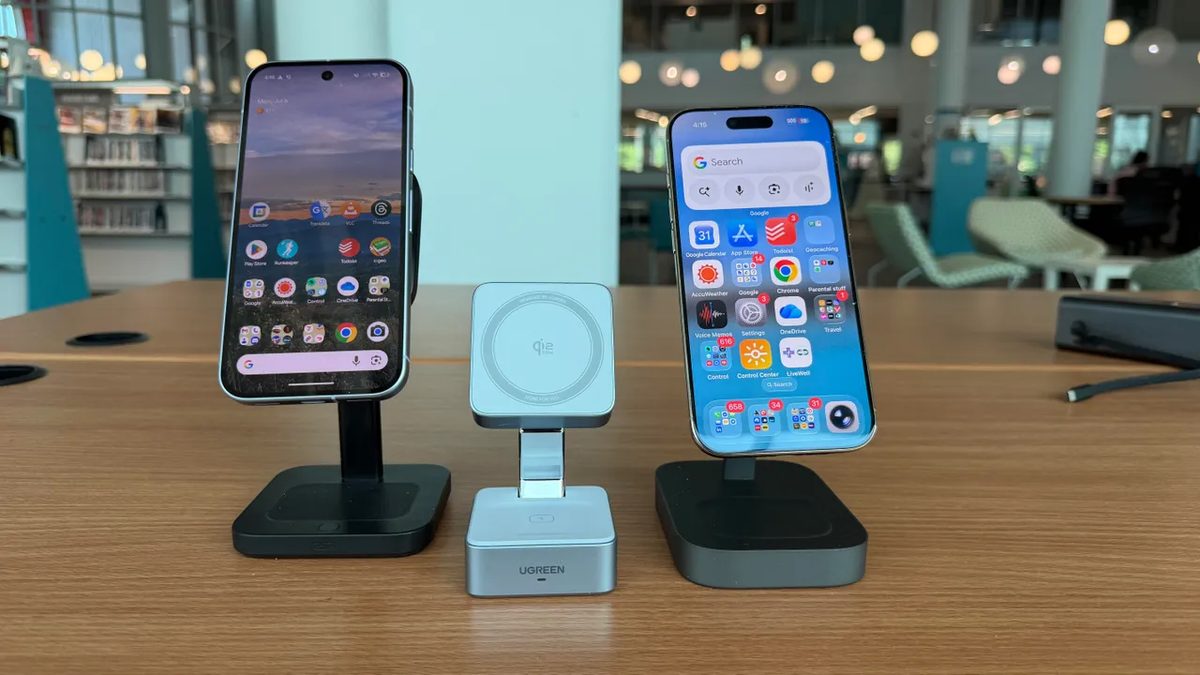
Photo: ZDNet
Quick answer
Testing Qi2 wireless chargers with cooling systems showed that active cooling (fan-based) effectively reduces smartphone temperature more than passive solutions.
Qi2 wireless chargers are gaining popularity, but their main drawback remains smartphone overheating during charging. ZDNet’s expert tested three models—Mophie with passive heat dissipation, Ugreen with dynamic power regulation, and ESR with an active fan—to evaluate their cooling efficiency.
The test involved iPhones and Google Pixels with Qi2 support, charging for 30 minutes before measuring device and charger temperatures. ESR’s fan-equipped model showed the least heat increase, with temperatures rising by just 7–8°C. Even passive solutions like Mophie’s heat sink delivered acceptable results.
Interestingly, wired charging heated the iPhone more than any wireless model in the tests, challenging the assumption that wireless charging is inherently problematic. Ultimately, cooling efficiency is just one consideration; additional features like multi-device charging support and portability also influence the best choice for users.
Common questions
- Why do wireless chargers heat up smartphones?
- Heating occurs due to energy transfer through air, leading to energy loss and heat emission. This is a natural process that affects both the battery and device casing temperature.
- Which cooling system is more effective: passive or active?
- Active cooling with a fan delivered the best results in tests, though the temperature difference was minimal. Passive solutions like heat sinks also work but are less efficient.
- Does overheating affect battery lifespan?
- Yes, prolonged overheating can reduce battery lifespan. Modern chargers include protection systems to minimize overheating risks.
Dzen feed: /feed/dzen.xml · RSS: /feed.xml