
Scientists Clone Female Mice from Male Cells for the First Time
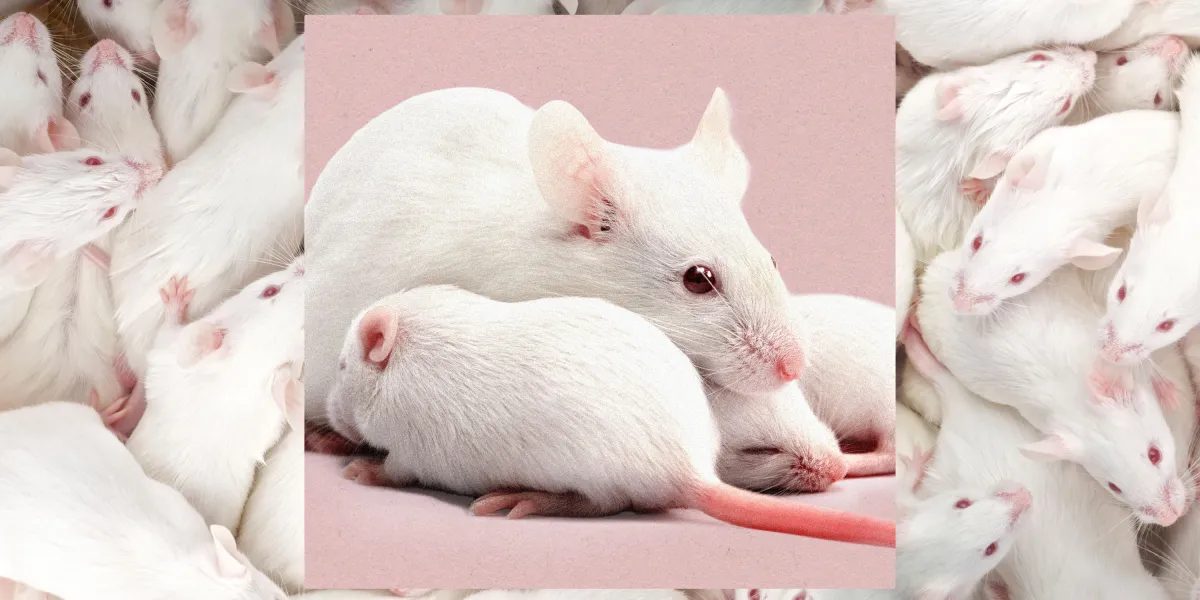
Photo: MIT Technology Review
Quick answer
Japanese scientists cloned female mice from male cells by altering the chromosomal set, potentially revolutionizing endangered species conservation and challenging traditional reproductive biology assumptions.
A team of Japanese researchers led by Takashi Ishiiuchi from the University of Yamanashi and Shogo Matoba from the RIKEN Center for Biosystems Dynamics Research has achieved a historic milestone by cloning female mice using male cells. The findings, published as a preprint on bioRxiv, have not yet undergone peer review but have already garnered global attention from specialists.
The breakthrough method relies on altering the chromosomal composition of cells. In mammals, sex is determined by chromosomes: XX for females and XY for males. By modifying male cells to achieve a female chromosomal set, the scientists successfully created viable female clones. The authors emphasize that this discovery could redefine traditional reproductive biology, which previously assumed the necessity of both sexes for reproduction.
One of the most promising applications of this technology is the conservation of endangered species. In scenarios where only a few individuals of one sex remain, cloning with chromosomal modification could help restore populations. For instance, if only males survive, their cells could be used to create females, enabling reproduction. Wildlife conservation experts have already expressed optimism about the method's potential.
It is important to note that cloning remains a complex and often inefficient process. It produces genetically identical individuals, which may reduce a population's resilience to diseases. Nevertheless, in critical situations where a species is on the brink of extinction, such methods could become the only chance for survival.
Common questions
- How did researchers clone female mice from male cells?
- The team modified the male cells' chromosomal set (XY) to a female set (XX), enabling the creation of viable female clones.
- What practical applications could this method have?
- The technique could restore populations of endangered species when only one sex remains and open new avenues for reproductive biology research.
- Why is this discovery considered a breakthrough?
- It disproves the long-held belief that both sexes are necessary for reproduction and demonstrates the possibility of producing offspring of one sex from cells of another.
Dzen feed: /feed/dzen.xml · RSS: /feed.xml