
Wi-Fi 7 Mesh Systems: Should You Upgrade and What’s Changed?
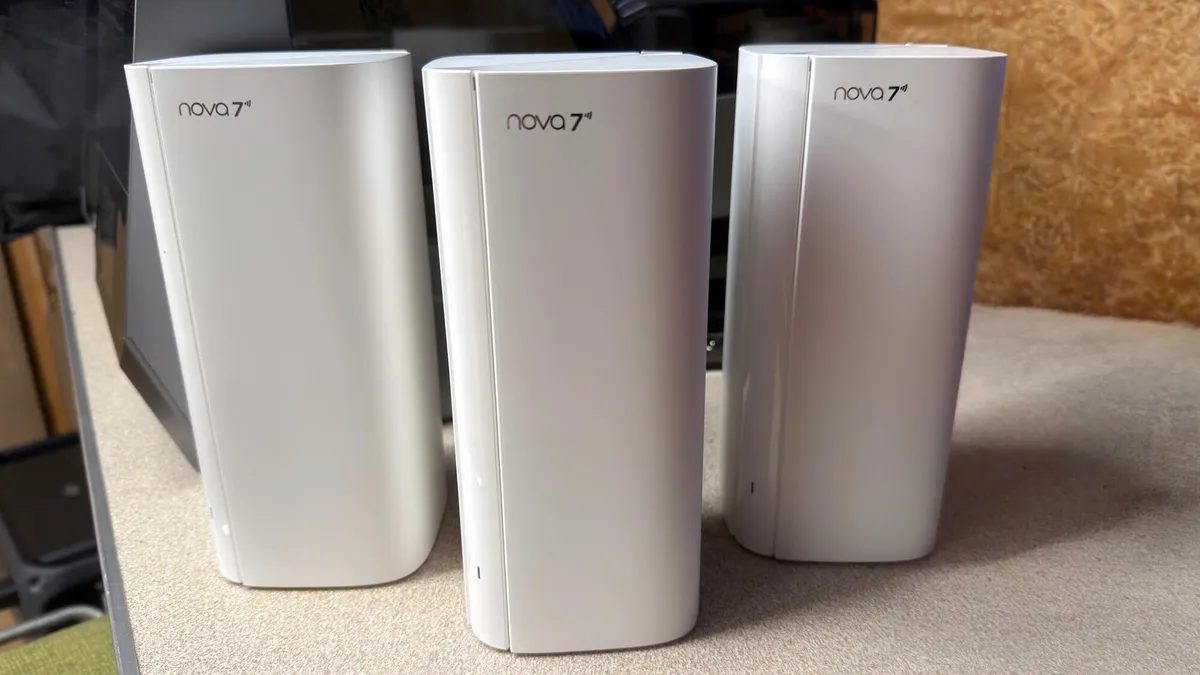
Photo: ZDNet
Quick answer
Weak Wi-Fi signals in homes remain a common issue, especially in buildings with thick walls or large floor plans.
Many users struggle with Wi-Fi issues: weak signals in distant rooms, constant connection drops, or the need to manually reconnect to different networks. Earlier solutions like Wi-Fi repeaters or additional routers often failed to deliver stable results. Next-gen mesh systems, such as Tenda BE5100, introduce a fundamentally different approach: a unified network with automatic roaming between access points, ensuring smooth coverage across the entire area.
Tenda BE5100 is a three-unit kit supporting Wi-Fi 7. Each device features five internal antennas and high-performance Front-End Modules (FEM), enabling speeds of up to 4.3 Gbps on the 5 GHz band and 688 Mbps on 2.4 GHz. The system can handle over 160 connected devices simultaneously, ideal for modern homes packed with IoT gadgets, smartphones, laptops, and media devices. In testing, three units covered 600 square meters, including a two-story house with thick stone walls.
Setup is straightforward and doesn’t require advanced technical knowledge. The Tenda app (available for iOS and Android) guides users through installation, while a built-in diagnostic tool helps quickly identify and resolve issues. An interesting feature is NFC tag support: after configuring the network, users can save connection details on a sticker and share them with guests. However, note that the tag isn’t protected against overwriting, so offices should use additional password protection.
Performance tests revealed impressive results for Tenda BE5100. Even under heavy loads—simultaneous 4K video streaming on ten devices and large file transfers between NAS systems—the network remained stable. Transferring a 30GB file took less than 100 seconds, confirming the advertised specs. Still, most home users may find these capabilities excessive: a standard 150–500 Mbps internet plan won’t fully unlock the system’s potential.
The three-unit kit retails for 13,595 RUB (on Amazon promotion), making it one of the most affordable Wi-Fi 7 mesh systems available. A two-unit kit is also available for 10,018 RUB for smaller spaces. Additional satellites can be purchased later for 7,200 RUB each if needed. Whether upgrading is worthwhile depends on your needs: for handling large data volumes or future-proofing your internet, this system is a solid investment, but for typical home use, its features may go unused.
Common questions
- Common questions
- Weak Wi-Fi signals in homes remain a common issue, especially in buildings with thick walls or large floor plans.
Dzen feed: /feed/dzen.xml · RSS: /feed.xml